
Opening: a framework-first take
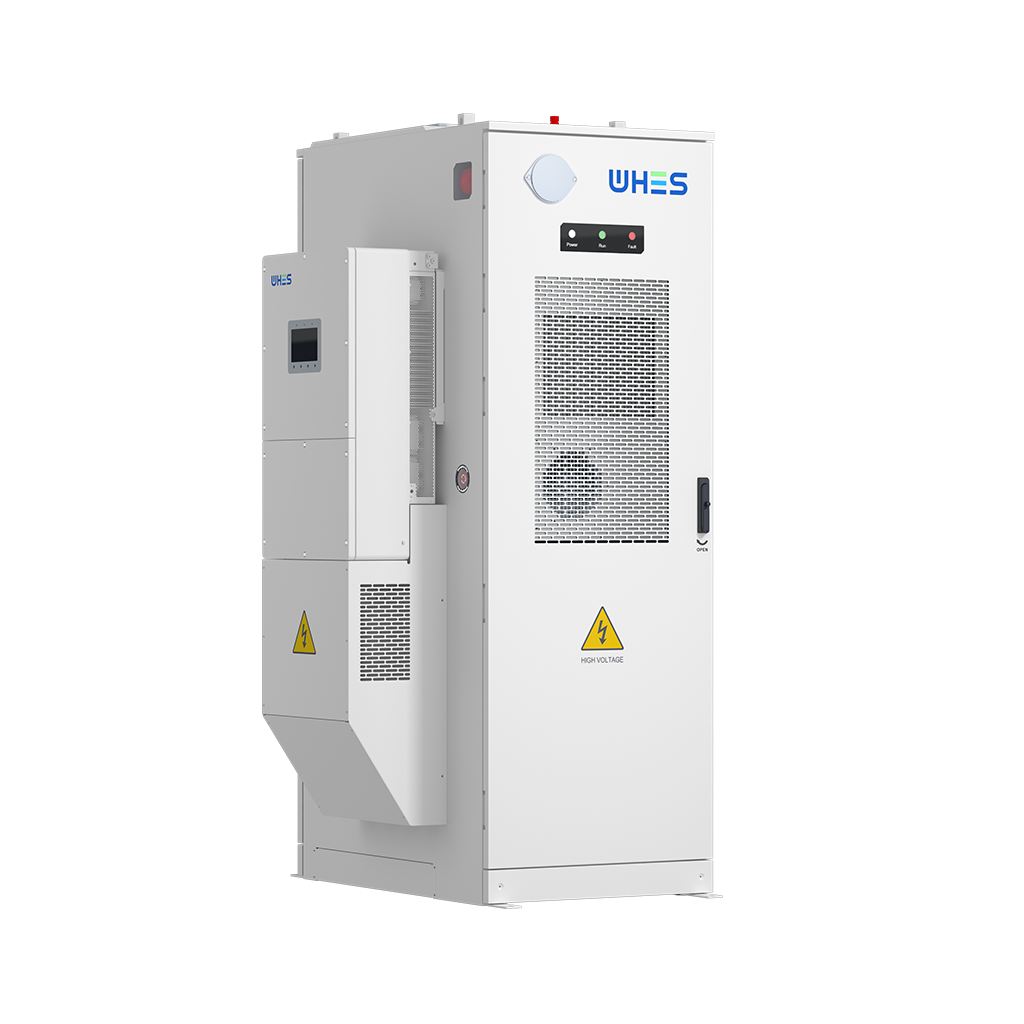
We need a repeatable, practical framework that helps utility leaders turn intermittent generation headaches into controllable grid functions — and that framework begins with deploying utility scale battery storage alongside clear operational automation. In the framework below, we treat storage systems as both physical assets and software-controlled resources, tying procurement, interconnection, and operations together so the solution reduces transmission curtailment while improving reliability. For many teams, the most effective levers are well-sized utility scale battery storage and automated dispatch logic that treats these assets as virtual transmission — think of them as a programmable line upgrade. You’ll also see how pairing that approach with proven grid scale electricity storage integration patterns closes the loop between planning and real-time operations.
Why transmission curtailment deserves a framework
Transmission curtailment is not just a financial drag; it undermines the economics of renewables and complicates resource planning. In regions like California, where the “duck curve” and midday overgeneration are well-documented, curtailment has become a predictable operational state during high-solar periods. That real-world anchor shows us two things: first, curtailment scales with variable generation if unmanaged; second, storage deployment can shift that excess energy to hours of greater value. To make that shift consistently we need a framework that spans planning, procurement, and automated operations — so the system behaves predictably under different grid conditions.
The four-stage Framework: Assess → Design → Deploy → Operate
We recommend a four-stage workflow that’s easy to translate into project milestones and automation tasks.
– Assess: quantify curtailment drivers with historical dispatch and line-flow data, flagging the most frequent congestion windows. Use scenario modeling to test how added storage changes flows.
– Design: size storage for both energy capacity and power rating. Consider state of charge (SoC) strategies and the mix of services (frequency response, energy arbitrage, capacity value) you’ll harvest.
– Deploy: align procurement with interconnection requirements and develop deployment automation: site commissioning scripts, firmware standardization, and telemetry baselines.
– Operate: automate dispatch rules, reconcile market signals with physical limits, and instrument runbooks for contingencies and curtailment events.
Technical considerations that must be codified
When we translate the framework into specs, three items must be explicit in contracts and system designs: interconnection limits, SoC management, and control-layer latency. Interconnection dictates whether storage can relieve transmission-constrained corridors or only provide local services. SoC rules determine readiness for peak evening export after a midday soak — and we’ve seen projects stall because SoC policy wasn’t reconciled with market participation rules. Control-layer latency matters when you coordinate multiple assets for congestion relief; automation and low-latency telemetry are the difference between a workaround and a validated congestion-mitigation strategy.
Automation patterns that scale mitigation
Adopt automated orchestration patterns so asset fleets behave like a cohesive transmission asset rather than isolated batteries. Use policy-as-code to encode dispatch priorities (e.g., relieve curtailment first, then provide market services). Implement closed-loop monitoring that adjusts dispatch profiles based on line flows and predicted generation — not just fixed schedules. —
We also recommend defining SLAs for telemetry fidelity and control response, because manual overrides create friction and increase risk during peak events.
Common trade-offs and alternate investments
Storage is one lever; transmission upgrades and demand response are others. Transmission expansion reduces structural curtailment but has long lead times and high capital cost. Demand response can trim peaks but is less effective for sustained midday excess. The right mix depends on planning horizons: near-term operational relief favors storage and automation; long-term capacity needs may justify reconductoring or new lines. Evaluating these options requires integrated capacity planning models that explicitly include curtailment as a cost line — and cross-functional teams that automate scenario runs so we can compare outcomes quickly.
Operational pitfalls and how automation prevents them
Teams commonly under-spec two things: state-of-charge constraints and inter-device coordination logic. Under-spec’ing SoC leaves assets unable to discharge when called upon; weak coordination creates competing bids across markets and local grid needs. Mitigation is straightforward: codify dispatch priorities, automate SoC buffer policies for congestion events, and run pre-deployment integration tests with representative dispatch scenarios. These tests should be part of your CI-style pipeline for operational software — treat firmware and dispatch algorithms like deployable code.
Real-world anchor: lessons from a high-solar grid
Look at California’s operational playbook: during high-solar midday periods, curtailment rose as renewable penetration increased, prompting operators and developers to pair storage with fast-responding controls. The takeaway is practical — storage combined with automated dispatch lowered net curtailment and increased renewable utilization without waiting years for transmission builds. That experience underlines the importance of operational playbooks and automated runbooks that we can rehearse before stress events.
Trade-off checklist for procurement teams
When you evaluate vendors and architectures, use these quick checks to avoid common mistakes:
– Can the vendor demonstrate automated congestion-mitigation use cases? – Are SoC policies configurable and enforceable via remote commands? – Does interconnection documentation specify export limits and telemetry requirements?
Advisory: three golden evaluation metrics
1) Curtailment Reduction per MW Installed — measure the marginal reduction in curtailed energy relative to storage capacity added, over representative days. 2) Dispatch Latency and Reliability — quantify average control-loop latency and the percent of successful automated interventions during congestion events. 3) Revenue-Adjusted Levelized Cost — evaluate LCOE-like metrics that include avoided curtailment loss and ancillary services revenue, not just capex and opex.
Closing: why this framework points to practical value
When we orchestrate storage as programmable transmission, we unlock reliable reductions in curtailment and better utilization of renewables — and that orchestration is where WHES brings practical value through integrated project execution and operational automation. WHES. —
