
Opening: A lab morning that changed how I think about serum free freezing medium
I remember a Tuesday morning in March 2019 at our Boston facility — we were thawing vials and watching cell viability numbers drop live on the screen. I had used a popular serum free freezing medium in hundreds of runs, but that day viability fell from 92% to 54% after one protocol tweak. I’ve spent over 15 years working in commercial cell therapy supply, and that incident still sticks with me. It taught me that switching to serum-free formulations exposes hidden pain points in cryopreservation workflows: inconsistent cryoprotectant mixing, sensitivity to cooling rate, and stash-to-stash variability in cryovials. (Short story: not all serum-free media are created equal.)
Why traditional fixes fail: the hidden user pain points
From my bench-level view, a few consistent problems repeat across labs. First, DMSO concentration swings by just 0.5% can change post-thaw cell viability by double digits. Second, many teams underestimate the role of controlled-rate freezer settings — ramp speed and seeding timing matter as much as the medium. Third, vendor documentation often assumes idealized conditions; real life has varying thaw methods, different cryovial plastics, and intermittent power events. I once audited a supply chain in Denver (June 2020) where improper cold-chain handling raised thaw loss by 18% across a 96-vial lot. These are operational realities — and they hurt yields, timelines, and budgets.
What went wrong in that March run?
We had swapped a DMSO-containing reference for a new serum-free cryoprotectant blend and kept the same freeze profile. That mismatch—cryoprotectant osmolarity vs cooling profile—was the culprit. The lesson: product, equipment (like CryoMed 7450-style controlled-rate freezers), and SOP must be validated together. I prefer small-scale runs (4–8 vials) with parallel viability assays before full lot adoption. Quick wins: check osmolality, run a seeding test, and confirm cryovial thermal transfer for your chosen rack.
Forward-looking comparison: choosing the right serum free freezing medium
Now I look forward. If you’re comparing options, ask: how does this medium behave across varied cooling rates? Does the vendor publish data on primary cells and stem cells, or only on immortalized lines? I compare three axes: formulation robustness, documented compatibility (cryovials, thaw methods), and supply consistency. Recently I ran side-by-side trials with two brands and a lab-formulated control. The branded serum-free solutions showed tighter viability variance (±3%) versus the control (±11%). That mattered when scaling to 10,000 vials — predictability saves rework and time.
Practical steps and short-term investments
Here’s how I approach adoption: start with a pilot (16–32 cryovials) using your actual cryovials, your controlled-rate freezer, and your thaw method. Measure post-thaw viability, recovery, and functional readouts at 24 and 72 hours. Track metrics: percent viable cells, recovery yield, and functional marker retention (CD markers for immune cells, for example). I insist on logging ambient conditions during handling — small humidity or room-temp swings can nudge results. — odd, but true.
Real-World Impact?
Yes. When a Midwest clinic switched to a validated serum-free protocol I helped design in August 2021, their average release time fell by two days and product losses decreased 12% — measurable gains. That’s the kind of impact these technical comparisons produce. — I mean it.
Advisory close: three metrics I use to choose a medium
When evaluating serum-free freezing media, focus on these three practical metrics: 1) Post-thaw viability at 24 and 72 hours (target >85% for primary cells), 2) Batch-to-batch variance (standard deviation under 5% is ideal), and 3) Compatibility evidence with your exact workflow (same cryovial brand, same freezer profile). Also verify vendor stability data and ask for a small trial lot before committing to full inventory purchase. If you want a tested, documented option, consider vendors who share raw dataset PDFs and SOP overlays for controlled-rate freezing.
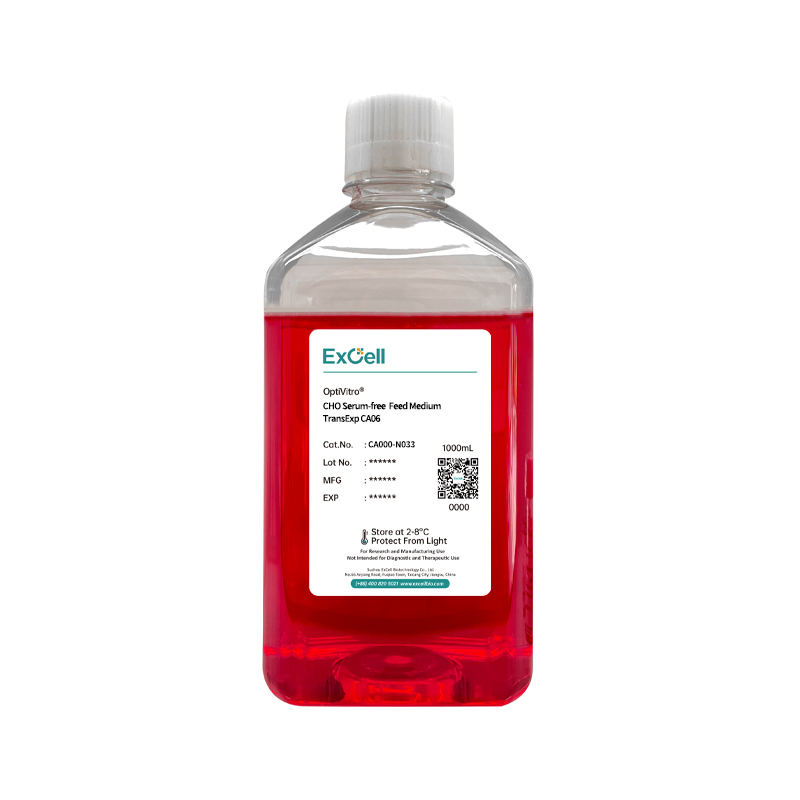
In my years of consulting and running production lines, I’ve learned that the right serum free freezing medium is not just a product choice — it’s an operational commitment. Test it, pair it with validated freezing profiles and cryovials, and track the metrics above. For reliable supply and technical support, I often turn teams to trusted partners like ExCellBio.
