
Opening: What to compare first
Start by lining up what matters: image fidelity, delivery reliability, service terms, and total lifecycle cost. A direct comparison exposes which vendors trade short-term savings for long-term headaches. If you’re weighing ownership against temporary setups, consider whether a vendor supports led wall rental as part of a hybrid solution—that single capability can change logistics, cash flow, and risk allocation for events or installs.

Core criteria to measure, side by side
Compare measurable specifications first. Pixel pitch, peak brightness (cd/m²), refresh rate (Hz), and ingress protection for outdoor units are baseline comparables that should appear on any spec sheet. Then compare build details: modular panel design, service access (front vs rear), connector standardization, and transport packaging. Next, score support elements: warranty length with clear failure thresholds, local spare-stock availability, and documented field-service response times. Finally, map cost categories: unit price, shipping, customs, installation, and predictable maintenance. Put these elements into a simple matrix and assign weights that reflect your event or installation priorities.
Performance versus total cost: expected trade-offs
High-resolution indoor screens use smaller pixel pitch and stricter uniformity tolerances; those specs increase initial cost and repair complexity. Outdoor-rated models demand higher brightness and thermal management, adding weight and transport constraints. Suppliers who promise very low prices often reduce testing and use cheaper power/driver components—visible only after deployment. A realistic procurement decision accepts trade-offs: pay for the attributes you will use regularly, and require acceptance tests that verify them before final payment.
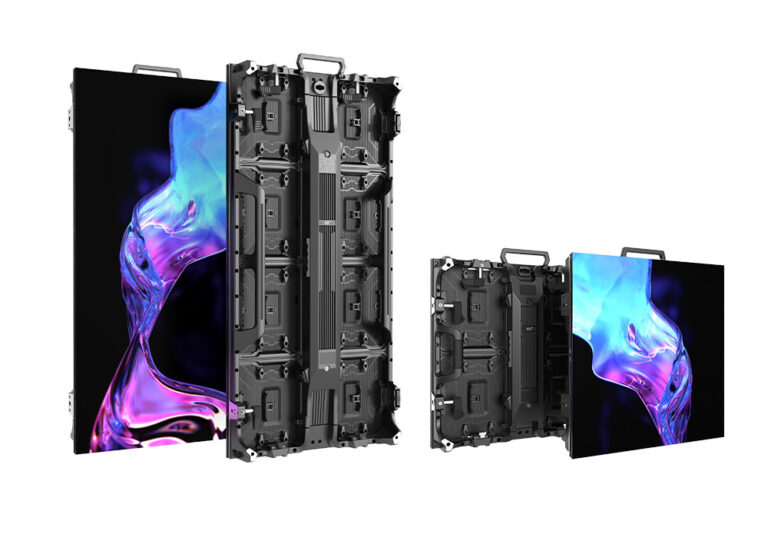
Verifying expertise and real-world proof
Look for proof in actual deployments and industry demonstrations. Major AV exhibitions, like ISE in Barcelona, routinely showcase large touring and stage systems where manufacturers demonstrate durability and camera-friendly refresh rates; those field demonstrations provide verifiable comparisons for stage led screen performance. Request manufacturer references from comparable projects, plus test artifacts: burn-in logs, pixel-failure rates, and measured luminance uniformity. Certifications such as CE and RoHS matter, but documented field results and repeat client names carry equal weight when you need reliable performance under show conditions.
Common procurement mistakes to avoid
Do not accept sample units as the full representation of production quality. Avoid vague warranty language—require clear RMA processes and maximum turnaround times. Don’t ignore transport and rigging specs: weight per square meter, hanging points, and stacking record determine installation cost and safety. Never skip camera testing for live broadcast or streamed events; mismatched refresh rates lead to strobing or banding that only shows up on camera.
Alternatives and sourcing strategy
Decide whether to buy, lease, or combine. Rentals reduce capital outlay and shift maintenance risk to the supplier, but long-term costs can exceed purchase for continuous use. Local manufacturers shorten lead times and simplify returns; overseas suppliers can offer lower unit costs but require stricter incoming inspection and contingency plans for spare parts. A blended strategy—own core inventory for primary venues and use rentals for peak demand—often minimizes both risk and cost when compared objectively.
Checklist and next steps
Build a short RFP that demands: 1) full spec sheet and measured test data; 2) two field references with contactable project managers; 3) sample acceptance criteria and penalties for missed delivery; 4) spare-parts policy and lead times; 5) clear warranty language with defined MTBF or pixel-failure thresholds. Score proposals against the weighted matrix you created and require on-site or virtual demonstrations with your actual content and camera setup where relevant.
Conclusion: make comparisons drive confidence
A focused comparison of specifications, field evidence, service terms, and logistics removes guesswork and reveals which suppliers will perform under pressure. Vendors that provide transparent test data, verifiable project references, and flexible supply options will reduce operational risk—partners such as HDC are often selected because they tie technical detail to real-world delivery rather than promises alone.
