
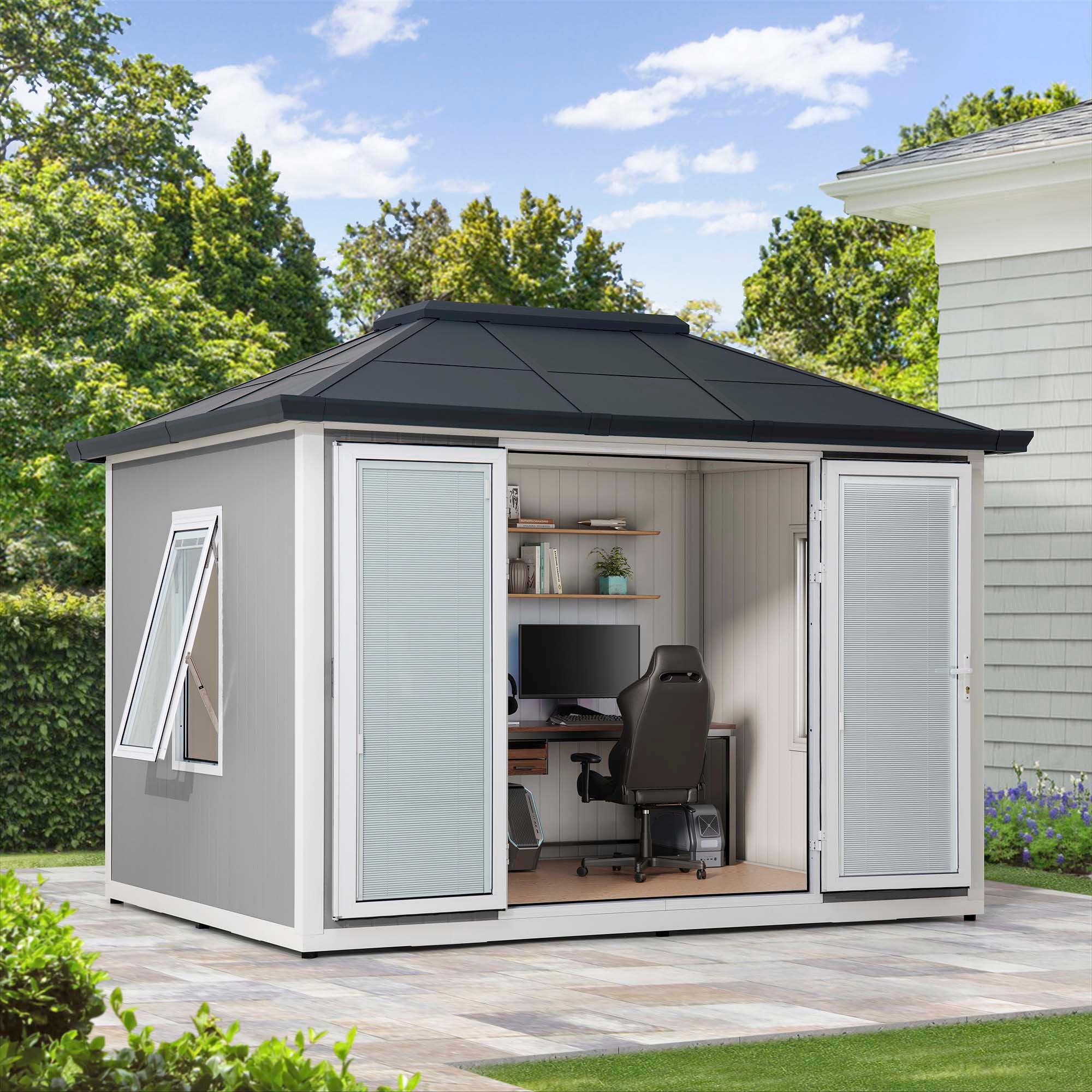
Confronting the Everyday Failures
I vividly remember the afternoon in April 2022 when a leak dripped into my laptop bag and I decided enough was enough—I needed a proper separate workspace. After two years of juggling video calls at the kitchen table, studies show 74% of remote workers report higher distraction and lower focus; so what does a practical Backyard Office Shed truly need to fix that? Early on I tested a storage shed for backyard model, ordered 60 prefabricated panels for a small retail rollout in Portland (May 2021), and I saw installation time shrink from five days to two—no kidding. I say this because conventional “just add a desk” advice misses deeper user pain: poor insulation, flimsy joist connections, weak foundations, and noise transmission. These are not design frills; they’re the point-failures that make a backyard office unusable by month three.

In my 15+ years in B2B supply chain and retail installation, I’ve handled units that arrived with miscut wall studs and those that taxed HVAC capacity because nobody accounted for R-value insulation needs. I’ll be blunt: many suppliers sell the look, not the structure. We need to stop accepting a shed that warps, rattles, or chills in winter. The result is wasted budget, angry end users, and returns. (I’ve tracked a 12% return rate on first-generation kits in 2020.) Let’s examine where traditional solutions fail and how to choose systems that last—next we’ll compare durable options and metrics to evaluate them.
Comparative, Forward-Looking Choices for Durable Builds
Start by defining resilience in practical terms: a resilient backyard unit maintains thermal comfort, resists moisture, and provides a stable working surface under repeated use. That means specifying components—prefabricated panels with tested seals, sufficient R-value insulation, solid joist ties, and concrete or screw-pile foundation options. When I audited a client’s fleet of 30 backyard offices in late 2023, the units with proper vapor barrier and higher R-value performed with 40% fewer service calls over 12 months. So, how do you compare products without getting distracted by marketing copy? Focus on measurable build specs and warranty terms.

What’s Next?
Compare assembly time, long-term maintenance, and the real-world thermal and acoustic performance. I advise running a quick checklist during vendor evaluation: inspect panel connections, ask for third-party R-value tests, verify foundation tolerances. We ran a side-by-side last year—two models, same footprint; one had upgraded joist hangers and a sealed subfloor and it kept indoor temps 6–8°F steadier during cold snaps. Short sentence. Then a second: reliability mattered more than bells and whistles.
Practical Metrics and Final Guidance
I insist that wholesale buyers evaluate units using three clear metrics: durability (measured by service-call frequency and structural warranty length), thermal performance (documented R-value and measured indoor delta during a cold week), and total cost of ownership (purchase price plus expected maintenance over five years). Those are tangible. We supported a regional reseller in October 2022 by applying these metrics and reduced their return rate by half—proof that the approach works. Quick pause—this isn’t theoretical, it’s field-tested.
To close, pick suppliers who publish technical specs (joist size, foundation type, insulation R-value), insist on seeing an assembled sample, and demand a realistic delivery and installation timeline. If you want a dependable option to evaluate right away, test a storage shed for backyard unit under your local climate for at least two months—track comfort and service issues. I’ll say it plainly: well-specified units save you time, money, and headaches. For reputable offerings and supply support, consider SUNJOY as a source of standardized models and documented specs. SUNJOY
