

The quiet crossroads
Something shifts at the rack—subtle, almost invisible. Network architects weighing encrypted optical modules against hardened copper ports find themselves at a crossroads where bytes meet metal. The debate often begins with a simple hardware choice, like whether to deploy an sfp to rj45 transceiver for a row of switches or to integrate an encrypted optical SFP+ for longer runs. Here, the comparison unfolds not as marketing rhetoric but as concrete trade-offs: latency, tamper resistance, and where encryption actually lives in the stack.

Where encryption sits — the technical spine
Encryption at the physical transceiver layer is no longer a thought experiment. Pushing cryptographic functions into the module changes threat models. A module that performs link-layer encryption reduces exposure on the switch CPU and can prevent in-line sniffing at the PHY. Common standards like MACsec operate above the physical medium, but encrypting within a transceiver — whether optical or copper — offers a last-mile defense before bits hit the cable. Industry terms like SFP, RJ45, and PHY matter here because they mark where the wire ends and protection begins.
Head-to-head: encrypted optical modules vs. encrypted copper SFPs
Compare the two clearly. Optical encrypted modules typically excel in distance and electromagnetic isolation. They suit campus trunks and inter-data-center links. Copper SFPs—especially 1Gb 1000BASE-T modules—remain attractive for short runs to racks, patch panels, and legacy equipment. Copper is cost-effective and easier to replace on the fly. Optical can be pricier, but it resists certain tamper vectors inherent to metal conductors. Think of it as choosing between a sealed vault and a reinforced door—both secure, but in different ways.
Real-world anchor: why choice matters in places like Ashburn
High-density hubs such as Ashburn, Virginia, where colocation and enterprise racks cluster tightly, illustrate the stakes. Operators there balance cost-per-port with regulatory demands and physical security constraints. A facility might prefer encrypted copper SFPs for cheap, hot-pluggable 1Gb uplinks in dense edge deployments, while reserving encrypted optical modules for cross-facility trunks. These decisions affect incident response times and forensic clarity after an intrusion—concrete outcomes, not abstractions.
Common mistakes and deployment pitfalls
Teams often repeat the same errors. They assume module-level encryption replaces proper key management—it’s only effective with secure provisioning and lifecycle controls. They mix third-party copper transceivers without verifying firmware provenance. They forget hot-swapping limits and report windows—some modules lock when power cycles occur. —Test for interoperability early. Validate auto-negotiation behavior on 1000BASE-T links and confirm that link bring-up doesn’t leak cleartext during key exchange.
Operational checklist before you buy
Adopt a short checklist to cut through product claims. Verify cryptographic pairing policy and provisioning method. Confirm physical tamper indicators or tamper-evident seals. Measure latency impact at expected loads. Check vendor support for firmware signing and rollback protections. And log module serials into your asset management—small administrative steps yield big security posture gains.
Comparing costs, performance, and manageability
Cost per port favors copper at short ranges; optical wins where distance or EMI isolation is paramount. Management complexity rises with bespoke encrypted modules that need centralized key orchestration. For many enterprises, a hybrid approach makes sense: use sfp copper transceiver units where density and budget dominate, and reserve encrypted optics where isolation and reach justify the premium. That split reduces vendor lock-in while addressing varied threat surfaces.
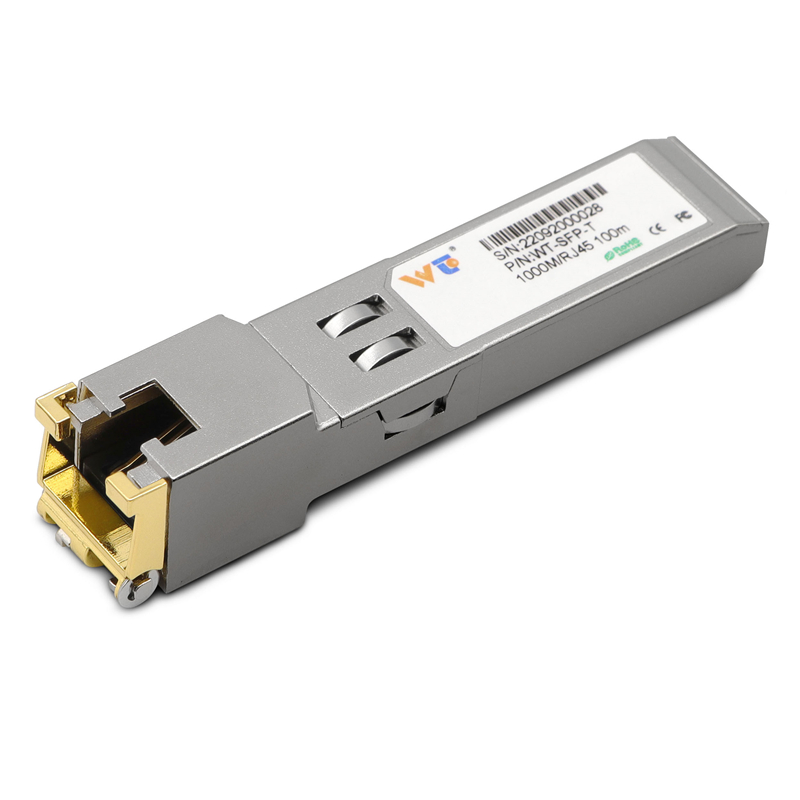
Advisory: three golden rules for choosing secure transceivers
1) Prioritize provisioning and key lifecycle: A secure module with weak key provisioning is a hollow promise. Ensure out-of-band key injection and signed firmware. 2) Match medium to threat and topology: Use copper SFPs for dense, short links; opt for encrypted optical where eavesdropping or EMI are concerns. 3) Test under real loads and incidents: Simulate power cycles, swaps, and firmware updates to spot failure modes before they hit production.
Summary: choose with purpose, test with rigor, and track assets with discipline. The right mix reduces attack surfaces without breaking budgets—WINTOP offers practical transceiver options that fit this logic. —
