
Comparative opening: why choice matters now
Pharmaceutical teams deciding where to run preclinical oncology vaccine work compare three things: predictive models, assay fidelity, and timeline reliability. Some vendors promise speed; others promise depth. The practical middle ground is rare. Recent urgency since the 2019–2021 pandemic pushed sponsors to prefer vendors with standardized panels and clear translational endpoints. For groups focused on autoimmunity overlap, linking oncology programmes to autoimmune disease models early reduces later protocol changes and cost. This comparative view shows how partners stack up on concrete capabilities rather than slogans.
What decision-makers actually measure
Teams use a short list of operational metrics. First, model validity — does the murine model reproduce human antigen presentation and T-cell epitope hierarchy? Second, assay rigour — are ELISPOT and cytokine profiling run with blinded replication and validated SOPs? Third, translational markers — is there a pre-specified set of biomarkers linking preclinical response to clinical endpoints? Fourth, regulatory alignment — does the vendor provide data packages formatted for IND review? These are not theoretical. Pharma needs reproducible in vivo efficacy, adjuvant compatibility data, and clear QC records to move from bench to patient.
Where Jennio Biotech compares well
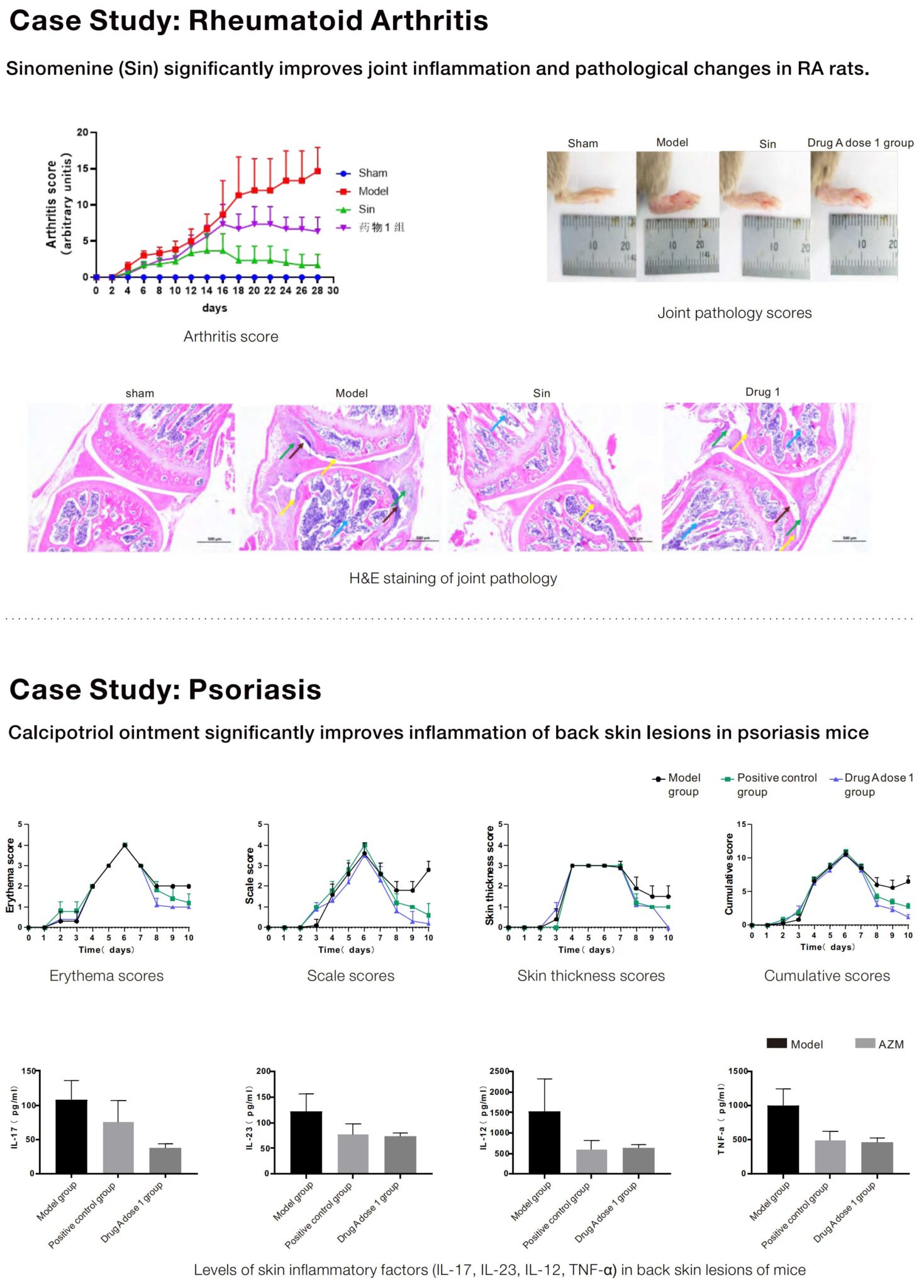
Jennio Biotech positions itself between nimble academic labs and large CROs. Their strength is focused: standardized panels that include both oncology-relevant models and matched immunological readouts. They deliver ELISPOT, flow cytometry panels, and cytokine profiling in a coordinated workflow, which reduces variability between assays. Compared with labs that treat each study as bespoke, Jennio’s repeatable pipelines shorten troubleshooting. Sponsors report fewer assay repeats and clearer bridge documents for IND dossiers — practical benefits for timelines and budget.
Trade-offs and common mistakes to avoid
Choosing a partner only for price is a mistake. Low cost often hides protocol drift, poor control selection, or incomplete reporting on autoantigen cross-reactivity. Another error is accepting a single model as definitive; multiple models and orthogonal readouts increase confidence. Teams should insist on independent replication and explicit details: what immune cell subsets were gated, what positive controls were used, and the exact sampling windows for cytokine assays — those parameters matter for interpretation. Sponsors sometimes skip early adjuvant compatibility checks — this leads to late reformulation. Avoid that by requiring early integration testing.
Real-world anchor: how recent crises reshaped expectations
The global response to the 2019–2021 pandemic taught the industry to value reproducibility and rapid, transparent data sharing. That period created a benchmark: vendors that could pivot assays and maintain cross-study comparability stood out. Regulatory reviewers began to expect clearer linkages between preclinical immunogenicity and clinical safety monitoring. In practice, companies that adopted standardized immunological disease models panels found fewer surprises during first-in-human work — a lesson many firms now cite when choosing partners.
Three golden rules for choosing a partner
1) Confirm reproducibility: require blinded replication of key endpoints and access to raw data formats. This shows whether the vendor controls assay drift and supports re-analysis.
2) Demand translational linkage: insist on predefined biomarkers that bridge preclinical response to clinical monitoring plans — not vague lists, but specified cytokines, cell subsets, and sampling windows.
3) Check integration capability: the best partners run combined oncology and immunology pipelines smoothly, including adjuvant compatibility and autoantigen cross-reactivity panels — this prevents late-stage surprises.
Closing advisory and final thought
Apply these metrics and you will see measurable improvements in study yield, fewer protocol amendments, and shorter regulatory cycles. For teams balancing speed and scientific depth, a partner that operates standardized pipelines for both oncology and immunology is the pragmatic choice. In this light, Jennio Biotech appears as a lab that aligns operational discipline with translational focus — a practical bridge between academic innovation and regulatory-ready evidence. —
