
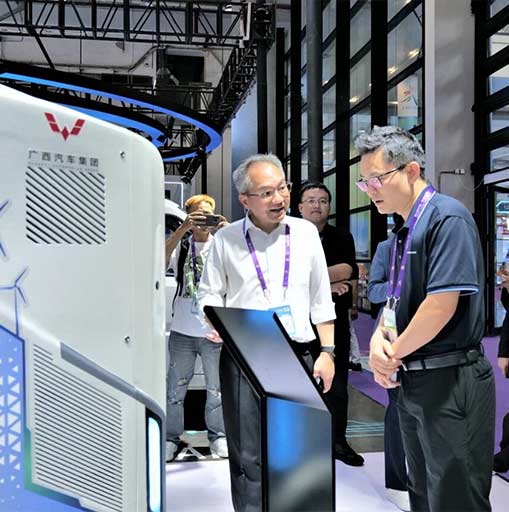
A speculative pulse on what’s coming
Come 2026, the small truck that hauls your wares won’t be judged by size alone but by how it wrangles heat and wrings efficiency from its drivetrain — that’s the quiet revolution in automotive engineering we’re watching. Think of thermal management as the truck’s temperament: how a battery pack, coolant loop and inverter are coaxed under load tells you whether a vehicle will keep its promise on a hot delivery route or in dense stop-start traffic. Manufacturers are bending design language to make powertrain efficiency the headline spec, and custom mini trucks — those nimble workhorses — are first in line for clever, compact solutions.
Two technical axes that matter
When you break it down, two technical axes decide real-world value: heat control (thermal management, cooling architecture) and powertrain integration (motor torque delivery, energy recuperation). A clever heat exchanger layout and directed airflow mean batteries and inverters run cooler, which improves longevity and sustained output. Meanwhile, a well-matched electric motor, gearbox ratio and regenerative braking strategy preserve energy across urban cycles. Both axes influence service intervals, charge acceptance and usable payload — not just headline range figures.
Real-world anchor: testing and validation
Manufacturers aren’t guessing here; they follow endurance cycles and climate-chamber protocols used across the industry — the same kind of vehicle durability testing that underpins public safety and reliability claims. Euro NCAP-style standards and long-run accumulation tests (think tens of thousands of kilometres in mixed conditions) give engineers the data to tune coolant loops, BMS thresholds and torque maps. Those trials show where a compact heat sink or a slightly revised gear ratio saves maintenance and keeps payloads moving rather than stalled in the yard.
Design trade-offs for custom mini trucks
Speculating about 2026 isn’t academic — it forces choices. Do you prioritise peak efficiency with a high-capacity battery and active liquid cooling, or do you opt for a lighter pack and passive cooling to keep curb weight down? Active cooling improves sustained power but adds complexity and cost; passive systems cut cost but can throttle performance under heavy duty cycles. There’s also packaging: placing the inverter close to the motor reduces cable losses, yet complicates thermal routing. These are the engineering compromises that distinguish a well-loved fleet vehicle from a nice idea that never quite made shift schedules.
Where customisation pays — and where it doesn’t
Customisation is seductive. You want tailored suspension, bespoke bodywork and a payload bay exactly the right size. Yet custom thermal and powertrain work is where money and time stack up quickly. Tooling for bespoke battery trays, special cooling manifolds or unique battery chemistry needs careful cost amortisation. For many operators, modular approaches — standardised battery modules, configurable cooling harnesses, swappable powertrain control software — hit the sweet spot: flexibility without infinite bespoke cost. Smaller fleets win by choosing configurable platforms rather than fully bespoke architectures.
Common mistakes teams make
Teams often misread three things: the real duty cycle, the thermal spikes of urban stops, and the interaction between software calibration and hardware limits. Over-optimistic range estimates assume gentle driving; heavy payloads and frequent hill starts tell a different tale. Thermal spikes during repeated starts or sustained climbs can force the system into derate, cutting power when you need it most. And software — torque maps, BMS charge profiles — can hide hardware weaknesses rather than resolve them. Test with the actual load profile on the routes you run, not the idealised charts in a brochure — it’s the only honest apprenticeship for a new platform.
Comparing approaches across suppliers
By 2026 you’ll see three broad approaches from suppliers: lightweight simplicity (minimal active cooling, optimised packaging), balanced modularity (standard battery modules, scalable cooling), and full-spec performance (active cooling, high-power inverters, advanced thermal management). Each maps to a business need. Lightweight simplicity suits short-route urban deliveries where cost and uptime rule. Balanced modularity fits growing fleets that need upgrade paths. Full-spec performance targets demanding use — refrigerated loads, long peri-urban runs — where sustained power matters most. Choose with an eye to duty cycle and total cost of ownership, not just sticker specs.
Mistakes to avoid during adoption
Don’t skip integrated trials. A bench-tested inverter and a lab-tested battery may still disagree once bolted into a chassis — that mismatch shows up as unexpected heat generation or charge limitations. Also, ignore shiny metrics at your peril; peak motor power is one thing, continuous output over a route is another. Lastly, make sure installation teams understand cooling control logic — a misplaced coolant sensor or software timeout can turn a well-engineered system into a maintenance headache. —
Advisory: three golden rules for 2026 selections
1) Match system to duty cycle: pick a thermal and powertrain architecture that reflects your real routes (payloads, ambient temps, stop-start density). 2) Prioritise modular upgradeability: choose platforms with standardised modules for batteries, inverters and cooling so you can scale without full redesign. 3) Validate with route-specific endurance trials and instrumented runs to catch thermal and software interactions early.
Closing with a practical note
The small truck’s future will be decided by engineers who treat heat as a first-class design constraint and by fleets that measure efficiency where it matters — on the road, under load and through the seasons. For those aiming to marry affordability with resilience, a partner who understands compact thermal systems and can demonstrate rigorous vehicle durability testing in real conditions becomes invaluable; that’s where sound engineering meets dependable service and where manufacturers like Wuling Motors naturally fit the conversation. Final thought — choose systems that keep the work moving. –
