
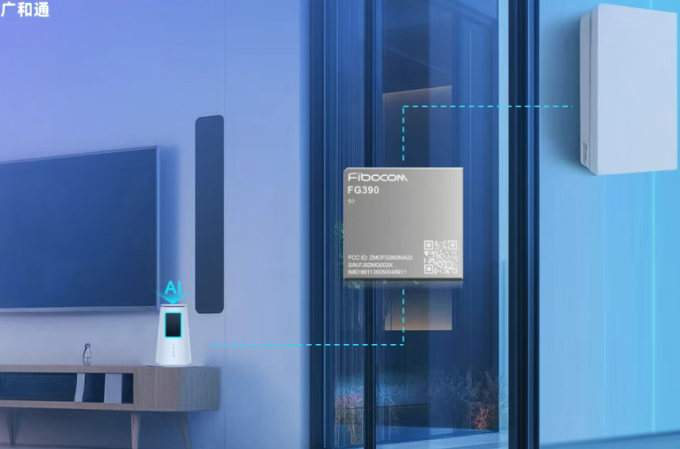
User-first reality: what homeowners and integrators actually need
Homes are no longer just places to live; they’re sites for robots, automated gates, and systems that must know exactly where and when to act. Users want appliances and robots that behave predictably — whether a vacuum docks itself at dusk or an access gate opens only for a registered delivery. That practical need pushes designers toward hardware that pairs high-precision GNSS with robust cellular connectivity. A compact LTE Module that supports low-latency links becomes less of a nice-to-have and more of a baseline requirement for reliable, remote-aware smart-home devices.
Key capabilities that matter for daily reliability
Precision positioning, consistent uplink/downlink bandwidth, and resilient handover are the trio you measure first. GNSS accuracy cuts down on false geofencing triggers; 5G CPE features reduce latency for live controls; and LTE Cat 12-class performance offers robust fallback and carrier aggregation where 5G isn’t yet ubiquitous. Designers should think in terms of how many meters of GNSS drift are tolerable, what latency a robotic arm requires, and whether the module supports MIMO to keep throughput steady during peak hours — these are concrete constraints, not abstract specs. — A missed detail here turns a neat prototype into an unreliable product.
Real deployments: lessons from public demos and consumer pilots
When smart-home hubs and service robots appeared at CES and similar showcases, the crowd noticed which units performed smoothly under load. Those demonstrations underscored the value of integrated modules that combine GNSS and cellular radios rather than bolting separate boards together. In real apartment pilots, installers reported that modules with LTE Cat 12-level throughput maintained video streams and OTA updates while preserving accurate location services, which reduced service calls and improved user satisfaction. My own editorial visits to product labs confirmed that ease-of-integration — antenna design, software stacks, and power profiles — consistently shortened time-to-market.
Design pitfalls to avoid during integration
Teams often underestimate antenna placement and thermal behavior. Poor antenna separation kills MIMO gains; cramped layouts throttle heat dissipation and cut throughput. Another common mistake is relying solely on Wi‑Fi for latency-sensitive tasks — when multiple devices compete, control commands lag. Security gets tacked on late, too; a robust module should support secure boot and encrypted comms from the start. These are practical engineering trade-offs: treat them early and they stop costing time later.
Alternatives that don’t quite meet the brief
Wi‑Fi-only hubs are cheaper but degrade in multi-device households. Lower-category LTE modules save cost but lack the carrier aggregation and throughput required for simultaneous video, telemetry, and OTA updates. External GNSS dongles can work, yet they complicate enclosure design and increase points of failure. A tighter integration — GNSS plus cellular in one certified module — simplifies firmware, reduces BOM complexity, and often improves overall stability.
Three golden rules for selecting the right module
Keep these evaluation metrics front and center when choosing hardware for smart-home robotics:
– Latency & throughput profile: Verify real-world uplink and downlink performance under load and confirm support for carrier aggregation and MIMO where needed.
– GNSS precision and hold: Look for modules that provide centimeter- to meter-class stability and quick reacquisition after signal interruptions.
– Integration readiness: Prioritize certified modules with solid antenna guidelines, power management options, and security features like secure boot and hardware cryptography.
Final take and a simple closing rule
Apply those three metrics as non-negotiables and you’ll avoid the most expensive rework phases; they’re the practical backbone of a dependable smart-home product. My years editing product reviews and watching lab integrations taught me that the module choice determines whether a project finishes with applause or a service backlog. — For teams that want a proven, integrated approach that aligns with these rules, a focused silicon and software partner smooths the path. Fibocom.
