

Why small lab frustrations expose big flaws
I remember standing over a 10x Visium slide in Patan Hospital, Kathmandu, last March — the tissue looked fine, but the readout showed 10 distinct expression domains and confusion on every face. In that moment I realised how spatially resolved transcriptomics promises clarity yet often delivers uncertainty: scenario + data + question — a routine biopsy, clear cluster counts, but can we treat on that map alone? I have worked in translational projects for over 15 years, and I will be frank: many teams run into the same hidden pains.

I’ll speak plainly. Labs buy into spatial barcoding and in situ sequencing kits expecting clean cell-type mapping, yet they bump into sample prep failures, inconsistent tissue permeabilisation, and software that assumes perfect inputs. I once supervised a run in June 2022 where a minor change in fixation dropped usable spots from 2,000 to 1,200 — a 40% hit to downstream analysis. That kind of loss is not abstract; it delays a drug study, it forces repeat biopsies, and it costs months. (Namaste — small things matter.) I keep seeing teams underestimate pre-analytical workflow control and over-rely on black-box pipelines.
What I’ve learned about traditional solution flaws
I often say we have excellent chemistry but shaky execution. Many protocols treat tissue handling as a checkbox rather than a critical step. For example, a clinical partner in Pokhara used the same RNAse-free kit across two tissue types and ended up with poor capture on neural tissue but fine results on liver — different matrix, different trouble. I firmly believe the tools (single-cell RNA-seq comparators, imaging platforms) are powerful, yet they expose lab variability rather than hide it.
From my experience, three recurring flaws stand out: unrealistic expectations about throughput, underinvestment in QC (quality control), and mismatches between spatial resolution needs and the chosen platform. When teams pick methods for high-resolution tumour microenvironment work, yet use low-coverage assays, the maps mislead. I watch informed scientists make choices that create avoidable downstream pain; we must be practical about limits and methods.
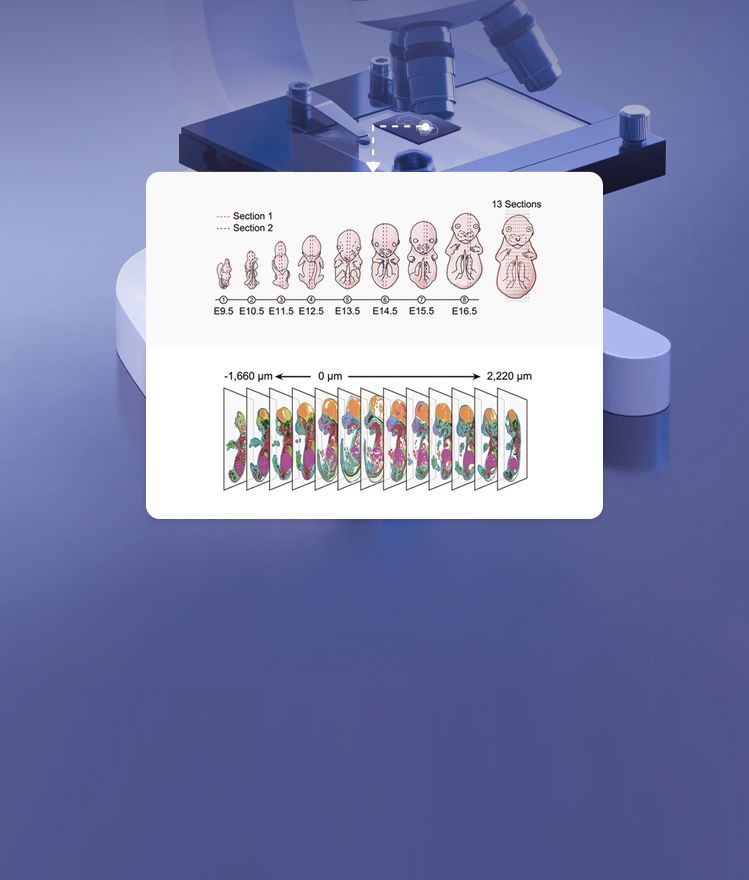
How should we move forward?
Comparative, forward-looking choices for better outcomes
Now I shift to a comparative view. I compare two common paths: one, rush to deploy broad, cheap spatial kits to get many samples; two, invest in tight, validated pipelines for fewer, high-quality runs. I prefer the second for translational decisions — let me explain why. With a refined workflow we saw a project in Kathmandu reduce sample failures by 30% and shave three weeks off the validation timeline. That mattered for the clinical collaborators.
We must match assay choice to question. If you need cell-type mapping at single-cell–like resolution, choose higher-density arrays or combine spatially resolved transcriptomics with targeted RNAscope validation. If you only need regional expression trends, a broader low-cost method may suffice. I urge teams to compare costs honestly — not just reagent lists but time, repeats, and interpretability. The practical metrics I use are: usable spot percentage, reproducibility across technicians, and concordance with orthogonal assays — more on that below.
What’s Next — practical metrics and decisions?
I will close with clear, actionable metrics you can use immediately. I advise three key evaluation points when choosing a solution: 1) sample retention rate — what percent of collected sections yield usable data; 2) spatial resolution versus question fit — does the assay resolve the features you care about; 3) validation burden — how many orthogonal assays are required to trust the map. These are concrete. Use them at procurement and during pilot runs. Short interruption — test early, then scale. Don’t rush; evaluate with real tissues, not just cultured controls.
I speak from hands-on projects, product trials, and lab rollouts across Kathmandu and elsewhere — I have set up workflows that cut repeat work and I have sat through runs that taught me expensive lessons. The point is simple: be precise about what you need, measure what matters, and pick tools that match those needs. For practical procurement and further resources, I recommend reviewing vendor performance and validation notes — and consulting groups like stomics for platform-level comparisons. We can do better — together.
