

Where the Real Bottlenecks Hide
I’ve moved more pallets of printed apparel than I can count, and the most expensive delays I’ve suffered never came from ink or press time—they came from film choice. DTF Film isn’t just a consumable; it decides whether a 3,000-piece run ships on time or sits on the dock. Early on, I swapped to dtf pet film to get control of peel consistency and stop color shifts under LED curing. On a rainy March morning in Joliet, we reprinted 180 hoodies after a brittle liner shattered at peel—how many hours of margin can you afford to burn like that? I’ve been at this for over 15 years in B2B supply, and I’ve seen the same pattern from Chicago to Shenzhen: when release liners curl, adhesive powder levels unevenly; when platen temperature drifts, wash-fastness tanks; when the film gloss is wrong, your color gamut closes up (no kidding). I’ll keep this tight and practical—let’s get under the hood and cut out the waste that sneaks into large orders.

dtf pet film: The Quiet Failure Points No One Quotes for
What fails first?
Let me be technical for a moment. Most “cheap but good” film bundles mask three weak links: liner stability, adhesive interface, and peel window. With 75µm matte cold peel, static builds along the feeder path and pulls powder where it shouldn’t, so the TPU adhesive clumps and creates speckling. A 100µm hot peel variant may speed your line, but if your press runs a true 155°C instead of the target 160°C, the ink layer under-polymerizes—then the transfer snaps at the edge of high-coverage solids. I learned that the hard way in May 2021 on a varsity jacket job in Elk Grove Village; 12% of panels cracked on first peel, and we ate a $960 rework.
Traditional workarounds—extra dwell time, baby powdering, or double pressing—only bury cost. Extra 8 seconds per piece at 2,000 units is 4.5 labor hours, plus heat press fatigue and drift in registration. A film with a stable release liner reduces misfeeds, and that alone protects your CMYK+W balance from micro-stretching. The right coating keeps ink saturation even so gradients don’t band, and the peel window stays wide enough that a distracted operator doesn’t blow the job. I favor matte films with balanced tack that tolerate small platen temperature swings and still peel clean. That design choice sounds small. It isn’t.
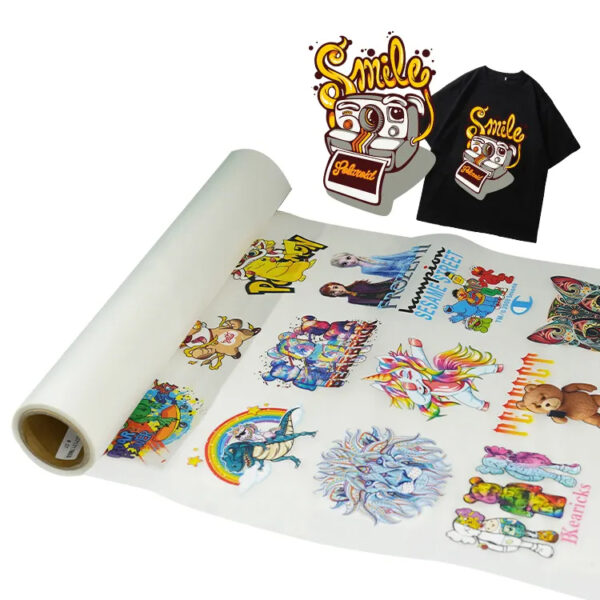
Looking Ahead: Comparing Film Choices by What They Save, Not What They Promise
What’s Next
I’m shifting gears to a forward-looking view—because the winning film is the one that removes variables at scale. When wholesalers ask me which dtf pet film to standardize on, I don’t start with price per roll; I start with three evaluation metrics that predict real throughput. First, peel tolerance: verify hot peel and cold peel windows across ±5°C platen drift and note failure modes (edge lift vs. mid-image fracture). Second, liner behavior: measure curl after 30 minutes under press-room humidity; a flat liner means your powder line stays even and your transfer rate remains stable. Third, color integrity under pressure: print a 6-step gray and a red patch at 90% coverage, then check Delta E after first wash—if it creeps above 2.0, that film is stealing your brand reds. Wait—that’s not optional. It’s the difference between a reorder and a return.
Here’s the comparative truth I’ve seen since 2009: a mid-tier film with precise coating beats a bargain liner when runs exceed 1,000 pieces, because it cuts reprint rates below 1% and holds wash-fastness without double pressing. That’s the lever. If you want a practical short list, ask the vendor for a 75–100µm matte sample with documented coating weight, confirm TPU powder compatibility, and run a 50-piece hot peel/cold peel mix at your real platen temp—not lab settings—and record peel force by operator. Then choose. I’m not romantic about materials; I’m loyal to what ships clean. If you need a place to start or just want a sanity check, I’ve had steady results working with Xinflying.
