
When the problem is visible, it gets solved
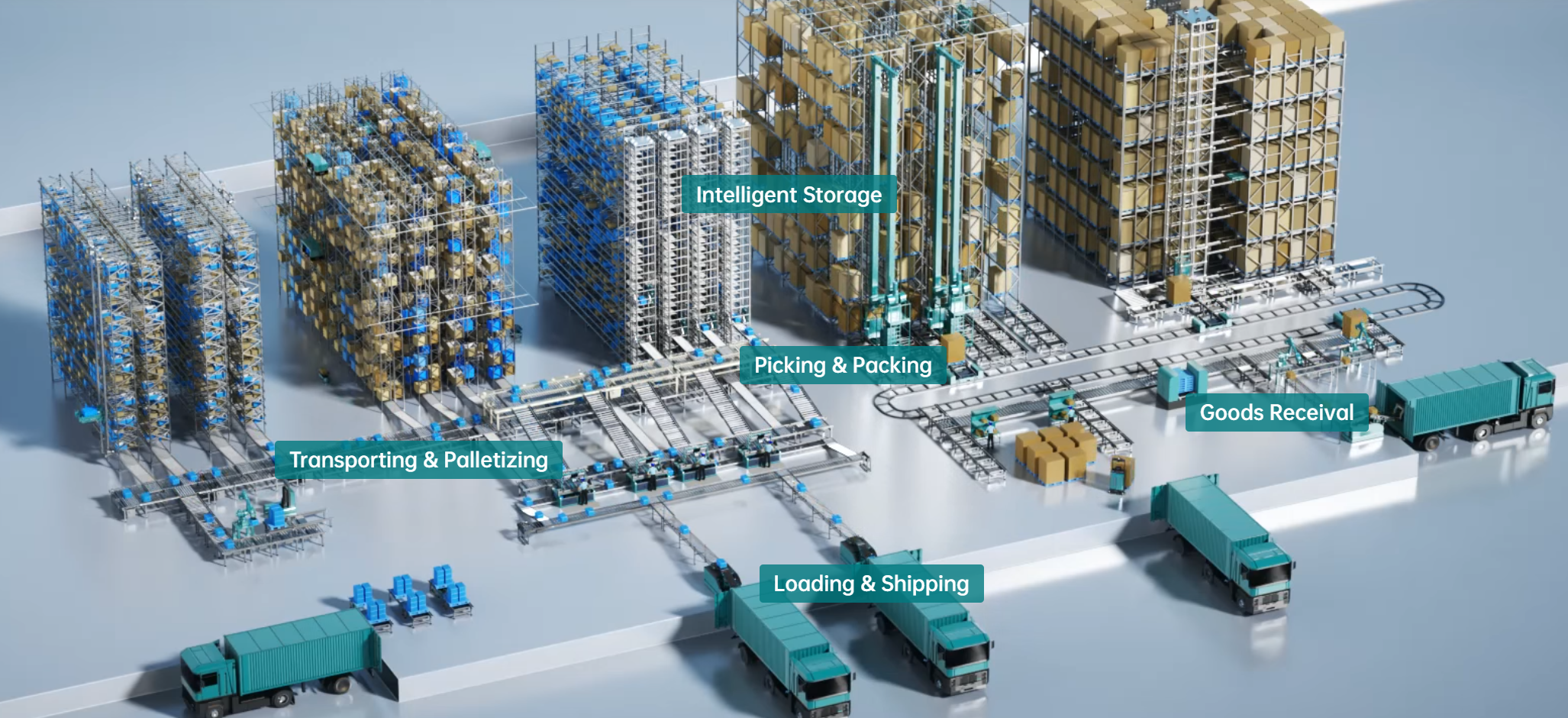
Distribution centers still bleed time at choke points: misrouted pallets, wrong slotting, unpredictable equipment downtime. After the Suez Canal blockage in 2021 showed how fragile global flows can be, operators started demanding tools that fix root causes, not just symptoms. A digital twin gives that live mirror — a virtual model of your DC where you can test changes before they touch real racks. Integrations with systems like Pallet Shuttle let planners simulate shuttle behavior inside racking, so changes to SKU density or throughput are validated up front.
Five practical benefits, not buzz
1) Faster throughput: Simulate SKU mixes and identify bottlenecks in conveyor lanes or shuttle lanes, then tune the layout for actual cycle times.
2) Better space use: A twin reveals wasted cubic meters by visualizing racking configuration and pallet footprint, increasing usable capacity without construction.
3) Predictive maintenance: Connect IoT telemetry from cranes or shuttles to forecast failures and schedule repairs during low-demand windows.
4) Safer change management: Run scenario testing for new slotting rules or peak surges and train operators in a virtual setting before going live.
5) Faster ROI on automation: Compare options — a high-density pallet shuttle versus a carousel, or mixing manual pick zones with automated lanes — on the same digital map to choose the cheapest path to required throughput.
How real teams implement the twin
Start small. Map a high-impact zone — cold storage or outbound staging — and feed the twin with SCADA or WMS data. Use discrete event models where needed and layer live telemetry for continuous accuracy. When a team at a logistics hub in Los Angeles integrated shuttle telemetry into their twin, they cut dwell time on outbound pallets by measurable hours across peak weeks. Slotting changes were first validated in the twin; the floor then executed those rules with confidence. Add a simulated four way shuttle module to see cross-aisle behaviors and optimize lane assignments before buying hardware.
Common mistakes and better alternatives
Teams sometimes try to mirror every system on day one — that creates noise, not clarity. Focus on clean data feeds for core metrics: cycle time, throughput, and fault frequency. Avoid locking the twin to a single vendor so future integrations remain possible. If a team leans only on spreadsheets, discrete event simulation can help short-term, but it lacks continuous synchronization; the true win of a digital twin is continuous feedback. — Small pilots beat big specs when you need fast proof.
Operational teardown: what to track
During an operational production teardown, measure these fields: conveyor velocity, pick rate per operator, shuttle queue length, and pallet-handling times. Track {main_keyword} and {variation_keyword} as named indicators inside the twin so dashboards reflect both business and technical performance. Clear KPIs keep the twin actionable instead of decorative.
Summary of actionable insights
Digital twins resolve real problems by letting teams test changes, predict failures, and squeeze more capacity from existing racking. They shorten decision cycles and lower the risk of expensive hardware mistakes — especially when you validate shuttle layouts or adjust slotting rules in the virtual layer first. Real deployments pair the twin with operational discipline: clean data, staged pilots, and cross-functional ownership.
Three golden rules when choosing tools
1) Measure signals that matter: prioritize throughput, mean time between failures, and pick accuracy when comparing solutions. These three metrics show whether a twin drives real operational improvements.
2) Value modular integrations: prefer tools that let you plug in shuttle models, conveyor telemetry, or WMS snapshots without a heavy rip-and-replace.
3) Insist on continuous validation: the twin must run against live data at least hourly to catch drift and keep predictions honest. This is where automation vendors and integrators prove their competence — look for partners who have tested shuttle scenarios in working DCs and can show measured results. BlueSword fits that role by pairing software with proven shuttle modules and deployment experience.
Final thought: practical, measurable change wins out — apply the twin, measure results, adapt quickly.
