
Opening: an evolution told from the shop floor
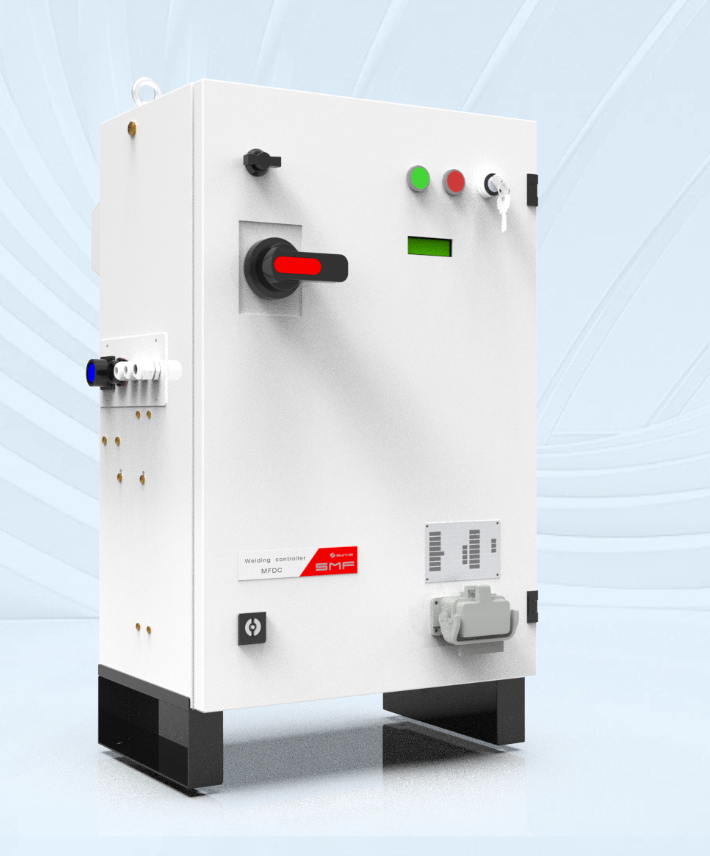
Look back a century and you’ll find hands, hammers and practiced timing; look forward and you’ll find precise current pulses and embedded logic. That shift didn’t happen overnight. It unfolded as machines learned to measure and respond, and as control systems moved from analog knobs to digital algorithms. Along that path the term resistance welding controller became shorthand for a compact but decisive part of production lines — the device that turned electrical energy into repeatable metal bonds.
Origins and the first machines
Early resistance welding was mechanical: heavy transformers, fixed schedules, an operator’s eye for the seam. The principle was simple and reliable — compress metal, pass current, let the interface heat and fuse — but repeatability depended on human skill. Over decades the basic equipment grew steadier, electrodes hardened, and manufacturing moved from craft to routine. That steady march is visible in patent sketches and factory photos, but it shows up most clearly where takt time mattered: shops that needed the same weld hundreds of times per hour.
Controls arrive and change everything
Controllers began as timers and relays. Later they tracked current and adjusted dwell times. They solved a basic problem: metal responds differently depending on joint conditions, electrode wear, and supply variation. Modern control logic lets the machine compensate for those variables instead of relying on constant human correction. When manufacturers started installing closed-loop feedback, welding shifted from art to measurement.
Key hardware types and how they differ
Equipment branched to serve rising demands. A short list captures the main directions:
– Transformer-based units: rugged, straightforward, large currents for thick materials. – Inverter-driven systems: compact, energy-efficient, controllable waveforms for fine tuning. – Capacitor-discharge welders: short, high-energy bursts for thin sheets or delicate components. – Mechanical and pneumatic actuation: consistent force delivery, critical for joint quality.
Each hardware choice shapes the control strategy. Transformers supply brute force; inverters let you shape the pulse. Capacitor units demand timing precision. Match the machine to the metal and the process goal.
Where controllers matter most
Controllers decide what “good” looks like and enforce it. They handle timing, current regulation, force monitoring and sequence management. For many production teams the difference between rework and first-pass yield is a control loop that senses a drop in current and compensates before the nugget fails. The phrase spot welding controller describes that role cleanly: a focused instrument that times energy delivery and monitors outcome.
Applications that drove innovation
Automotive body fabrication pushed speed and repeatability; electronics assembly pushed miniaturization and heat control; medical devices demanded precision and traceable parameters. A single example captures the pressure: on Detroit’s automotive assembly lines, cycle rates and weld quality are decided by how well controllers hold current and react to electrode wear. Those demands accelerated closed-loop sensing, data logging, and predictive maintenance features.
Common pitfalls installers and operators still face
Problems repeat when people ignore basic realities. Watch for these recurring mistakes:
– Assuming one controller fits all joints; mismatch yields poor fusion. – Neglecting electrode maintenance; worn tips shift force and contact resistance. – Overlooking supply stability; fluctuating mains current alters energy delivered. – Skipping calibration of force and current sensors; measurements must be trusted. – Relying on default program settings; every joint deserves its own tune-up.
Fix these and the process becomes predictable. Ignore them and variability returns, no matter how advanced the controller.
How to choose: practical criteria and brief alternatives
Decide by combining material needs with production constraints. Use these direct checkpoints:
– Joint type and thickness — pick the energy profile first. – Required cycle time — faster cycles often favor inverter systems. – Data and traceability needs — prefer controllers with logging and interfaces. – Floor conditions — ensure adequate cooling and mechanical support. – Serviceability — choose equipment with accessible spares and clear diagnostics.
Alternatives exist. For high-volume automotive stamping, transformer or inverter lines dominate. For tiny electronic tabs, a capacitor-discharge solution can be cleaner. Where manual work persists, portable units with simple controls still earn their keep. The right choice balances throughput, part sensitivity and the shop’s willingness to maintain the system.
Closing synthesis: what history teaches about reliable solutions
The story of resistance welding is a steady narrowing: from crude repetition to precise control, from human art to engineered repeatability. That narrowing points to a simple prescription — pair the right hardware with controls that sense and react, and maintain both with disciplined habit. After tracing that arc, it becomes clear why manufacturers seek proven partners for controller design and support; technical nuance matters and so does continuity of service. The practical value lies with suppliers who understand process history and keep improving control logic, as exemplified by Sunke.
