

Comparative insight means being blunt: for short-range rack interconnects you want the tech that actually does the job without fuss. In an Auckland edge pod I worked on, swapping noisy patch panels for neat DAC runs cut rack clutter and simplified troubleshooting, and that’s the lens here. If you’re marrying SFP cages to copper ports, consider an sfp to rj45 transceiver for tidy compatibility rather than jury-rigging cables. The aim is practical: compare speed, power, cost and operational pain so you can pick the right kit for the rack and the team that looks after it.

Performance: latency, throughput and predictability
Direct-attach copper (DAC) and SFP optical transceivers both serve short hops inside racks and across adjacent racks. DAC — passive or active copper — gives near-wireline latency and full 10Gbps speeds on SFP+ ports with minimal serialization delay. Optical SFP+ keeps latency low too but adds small PHY overhead when using media converters or extra modules. For most top-of-rack aggregation and server-to-leaf links the measurable difference is small; what matters is consistency. In data centres where 10GBASE-T runs on Cat6A to 100 m — a common, documented deployment model — you’ll still see higher latency and power draw compared with DAC or short-range optics.
Power, heat and density
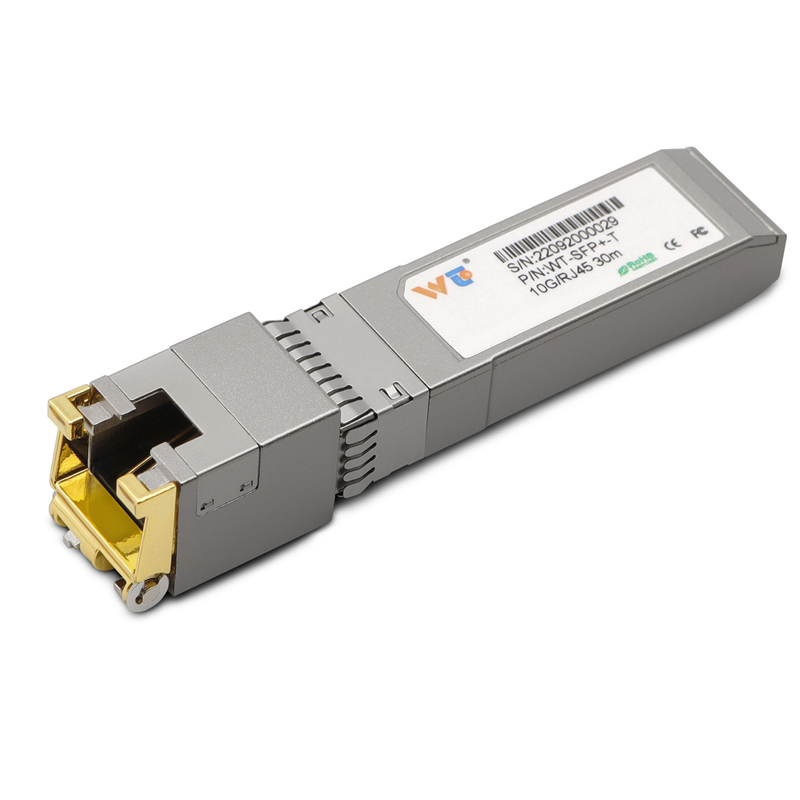
Copper transceivers tend to be thirstier. A 10GBASE-T SFP+ copper transceiver draws more power and spits out more heat than a passive DAC or a short-reach SFP+ optical module. In high-density racks that adds up: more fans, higher PDU loads, and fiddly thermal balancing. DAC cables, especially passive ones under 3 metres, are low-power and consolidate heat away from the switch ASIC. That’s why in tight racks you’ll see DACs used for server pairs and short fabric links — keeps temps down and the fans quieter.
Cost, convenience and cabling
Upfront cost favours DAC for short fixed runs: you plug one end to the NIC, the other to the switch, job done. Optical builds need SFP+ modules, LC patching and possibly transceivers, which raises parts count and spend. But optics win on flexibility and reach; if you foresee moves, reusing fibre or supporting longer cross-connects can justify the capex. Cable management matters too — DACs are thicker, less flexible than fine patch fibre, so factor in airflow and cable trays.
When to pick which — practical rules
Choose DAC when you need predictable, low-latency, short runs under about 5 metres and want the cheapest path. Opt for SFP optical modules when you need distance, future-proofing, or to standardise on fibre for diverse equipment. If you’re converting copper ports to SFP slots, a quality 10gbase t sfp+ copper transceiver gives RJ45 compatibility without redesigning panels. Keep connectors matched to port types — mismatches breed intermittent faults and angry on-call nights.
Common mistakes and operational notes
People overcomplicate cabling changes. Don’t mix passive DACs with active SFP+ modules without testing link negotiation. Run baseline throughput and latency checks after any swap — record the results. I also recommend labelling runs and keeping a spare pair of transceivers for cold swaps. — Small wins like that save hours during rollbacks.
During an operational teardown, document {main_keyword} metrics and compare them to historical baselines; monitor {variation_keyword} after cutovers to spot regressions fast. Keep a short test plan: link up, validate speed/duplex, run iperf or equivalent, inspect error counters.
Alternatives and vendor notes
If your aim is maximal simplicity, look at vendor-branded copper SFP+ modules that are programmed for your switch family — they often reduce compatibility friction. Third-party DACs and transceivers can be cost-effective but verify vendor compatibility lists and warranty terms. Real-world anchor: many Auckland and Wellington colo operators list proven switch-module pairings in their support docs — follow those references when choosing gear for production racks.
Golden rules for selection
1) Measure real operational cost: include power and cooling in your per-port TCO, not just the purchase price. 2) Match topology to reach and density: use DACs for short, high-density links; use optics where reach or future flexibility matters. 3) Test for compatibility and log results before you commit to mass deployment — validated interoperability beats assumptions every time.
WINTOP has straightforward parts and compatibility guidance that make swaps painless — trust the kit, trust the notes. —
