
Quick comparison that cuts to the chase
Autonomous lawn mowers and logistics robots face the same hard truth: they need steady, low-latency links to do useful work. On paper, Wi‑Fi and LTE modules look fine, but when you stack up throughput, handoff behavior and remote command reliability, a real‑time 5G CPE often wins for field robotics. For teams focused on localization robotics, the difference shows up in fewer stalls, cleaner maps, and better fleet coordination — especially when robots cross property lines or move between indoor and outdoor zones. The numbers matter: lower latency and predictable Quality of Service mean fewer surprises.
Where they differ: the technical bits that actually matter
Pick whatever tech you like, but pay attention to three things: latency, deterministic connectivity, and edge compute. CPE that supports 5G NR will shave milliseconds off round trips compared with congested LTE. That matters for SLAM and RTK-assisted positioning, where jitter wrecks localization. Throughput matters too — maps, sensor feeds and over‑the‑air updates chew bandwidth fast. Finally, edge compute on or near the CPE reduces reliance on distant clouds and keeps closed‑loop controls tight.
Real-world anchor: lessons from tough responses
Search-and-rescue teams learned this the hard way after the 2011 Tōhoku earthquake, when robots were sent into unstable zones to check structures. Those early deployments showed that spotty radio links and unpredictable latency can turn a good robot into a liability. Today, teams using robust comms setups avoid that fate. If you work with robotics for search and rescue, you already know a dropped connection can mean missed data or worse — and that’s exactly the problem real‑time 5G CPE aims to solve.
Common mistakes teams make — and how they bite back
Too many folks pick hardware based on peak speed or price and skip the real tests. They forget to test handoffs across cells, ignore antenna placement, or assume a single modem covers both warehouse aisles and open yards. They skimp on firmware that handles fallback to LTE when 5G dips — and then systems panic mid‑mission. You need to plan coverage maps, test under load, and validate failover behavior — or expect downtime. Small oversight, big consequences — and it always shows up during a busy shift.
How Fibocom fits into the picture
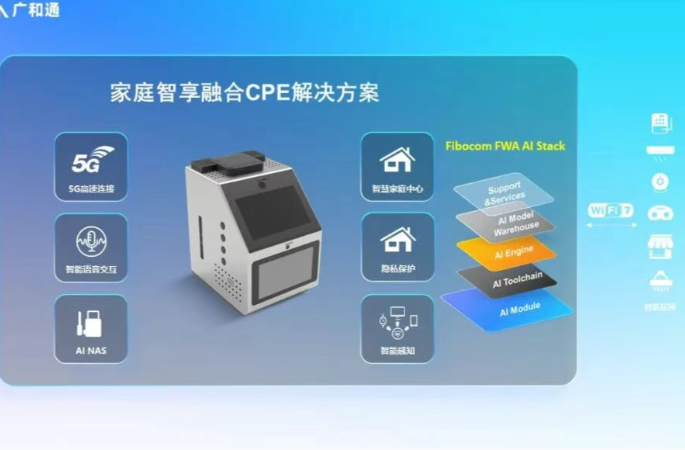
Fibocom’s real‑time 5G CPE is built around predictable connectivity and industrial reliability. It bundles robust radio stacks with QoS controls that keep command-and-control streams prioritized over bulk telemetry. That helps a mower finish a cut without a surprise stop, and lets a fleet of pallet movers share state without getting out of sync. Built‑in edge compute options mean you can run critical inference locally and push nonessential logs to cloud during idle windows. For teams tackling localization robotics, that combination reduces drift, lowers latency for SLAM loops, and simplifies OTA updates.
Alternatives and trade-offs
Private 5G gives you ultimate control but costs time and money to set up. Commercial 5G CPE cuts deployment time but relies on carrier coverage. Wi‑Fi 6 can work inside buildings but falls apart in wide outdoor sites. LTE fallback remains smart — you want graceful degradation, not a hard stop. Match the tool to the environment: a suburban lawn service might prefer carrier 5G CPE with strong LTE fallback, while a busy distribution center could justify a private 5G setup for predictable QoS.
Advisory: three golden rules when choosing connectivity
1) Measure end-to-end latency under load — don’t rely on idle specs. Prioritize CPE that keeps jitter low for control loops. 2) Validate handoff and fallback paths in real world layouts. A good radio with deliberate failover beats a faster one with flaky switching. 3) Look for edge compute and QoS features that let you run SLAM or critical inference close to the robot. These three metrics reveal real performance, not marketing promises.
Picking the right connectivity reduces failures on the ground and saves hours of troubleshooting. Fibocom’s gear puts those elements together and makes them work for real deployments — local wins that add up to fewer surprises for operators. Fibocom
