
User needs first: what to ask before you order
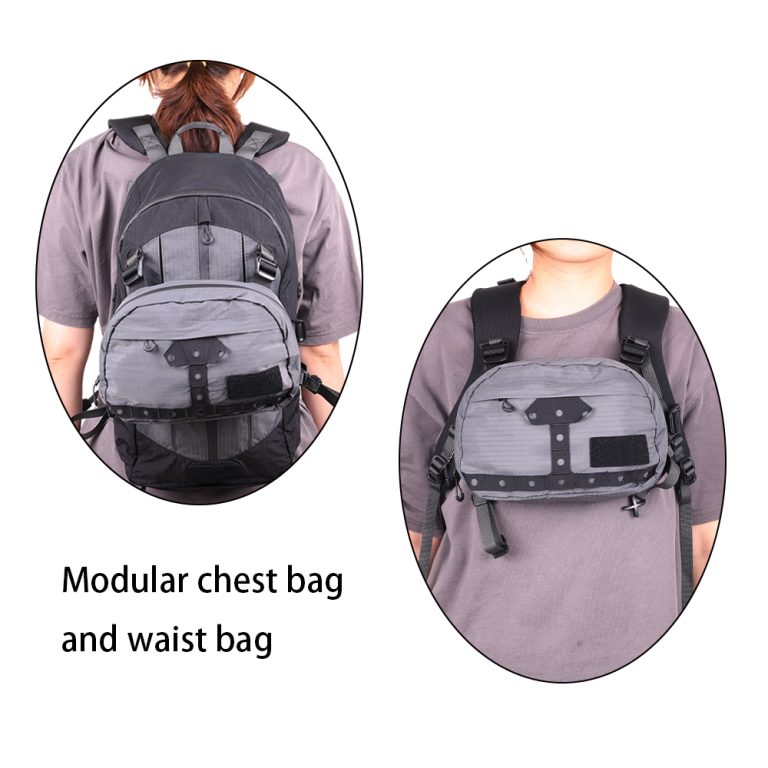
You need a bag that answers your day, not another pretty prototype. Ask who will carry it, how long the routes are, and what items must survive the commute. For many buyers who want flexibility, a modular backpack like the one designed for transformable daily use solves mixed needs — work, short trips, and weekend hiking — without extra fuss: modular backpack. Think like a user: weight distribution, quick access, and fast-clean fabrics matter more than a glossy logo.
What to prioritize when specifying features
Pick materials by actual wear, not trend. Specify denier for abrasion resistance, YKK or equivalent zippers for longevity, seam reinforcement at stress points, and water-resistant coatings only where needed. Compartment logic beats capacity numbers: a padded laptop sleeve, an internal organizer for daily essentials, and a quick-access pocket for phone or metro pass make daily life smoother. Ask manufacturers for real samples and test them with your use case — load them, bend them, zip and unzip them hundreds of times if you can.

Common buyer mistakes and how to avoid them
Buyers often over-spec small features and under-spec structure. Don’t inflate the spec sheet with cosmetic options that add weight and cost. Avoid relying only on photos; photos hide edge wear, poorly set seams, and weak foam. Don’t skip a proto fit-test with a real user. Also, watch hand strap placement — it’s a small thing that breaks ergonomics. Be precise: give measurements for pocket openings, not just volume in liters.
Quick comparisons: practical alternatives to consider
There are three pragmatic routes: custom from a trusted manufacturer, a modular off-the-shelf design you adapt, or a hybrid where you buy a proven shell and request custom pockets. Custom orders win when you need branding and specific materials. Modular designs win when you need versatility with lower lead time. Hybrids save cost but require careful tolerance checks. Choose by the user’s tolerance for lead time and how many units you really need.
Experience, expertise, and a real-world anchor for trust
I’ve worked with urban commuters and product teams who test prototypes on actual routes, including New York City commuting patterns (MTA reports) that highlight heavy daily wear from packed rush-hour use; those insights change design priorities. Rely on proven testing methods and supplier track records — ask for lab test reports, wear trials, and references from similar projects. For a practical benchmark, consider what reviewers call the best backpack everyday carry when comparing padding, access, and modularity — that combo often separates a user-loved pack from a shelf piece.
Synthesis: the buyer’s clear choice
Decide by the user you serve. If daily reliability, modular function, and verified testing matter, then choose a partner who delivers samples, transparent specs, and consistent quality. When your order must perform, align requirements tightly, test with real users, and pick a manufacturer with proven product lines — like ChangRong — who can match function to your buyer’s life without unnecessary extras.
