
How to Pick a Small Stainless Steel Sink That Actually Works for Compact City Kitchens
Start with what matters to you
If your kitchen is cramped and you need something that performs without stealing counter space, focus on fit and function first. Think about how you use the sink every day—washing pans, stacking dishes, prepping veggies—and measure the cabinet and counter before anything else. For quick browsing, a simple sink for kitchen search helps, but the right choice comes from matching dimensions and habits, not just photos.

What a small stainless sink must deliver
Compact sinks still need core capabilities: enough bowl depth to hide water and splashes, a durable gauge that resists dents, and an easy-to-clean finish. Noise reduction matters when your apartment walls are thin. Choose a sink that makes everyday chores simpler, not one that forces awkward workarounds.
Practical checklist for selection
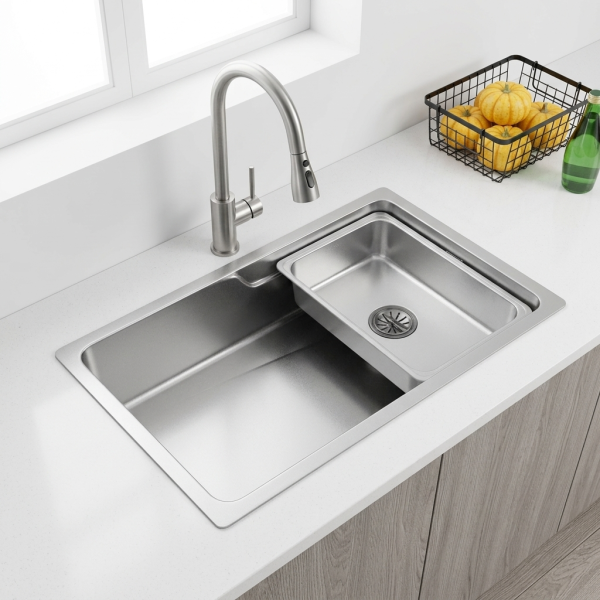
Measure twice. Check the cabinet width, counter overhang, and the clearance under the countertop for plumbing. Pick bowl size by your routine: single deep bowl if you wash big pots, shallow double bowl if you rinse and stack. Aim for 16–18 gauge for balance between weight and dent resistance. Decide mounting style: undermount saves counter edge space, top-mount simplifies installation. Confirm drain placement so it doesn’t clash with garbage disposals or cabinet fixtures. Look for rounded corners for easier cleaning and a satin finish to hide scratches. Small accessories—chopping boards that sit on the rim, roll-up drying racks—turn a tiny sink into a flexible workstation.
Common mistakes to avoid
Buying by looks alone. Overestimating clearance for a deep bowl. Ignoring water splatter when you choose a shallow sink. Forgetting to check the position of cabinet shelves or pull-out bins that might hit the plumbing. Choosing the thinnest metal to save money; thin gauge often dents and sounds tinny. Skipping sound-absorbing pads; a cheap sink can make daily life noisy in a small flat.
Alternatives and trade-offs
Composite sinks resist scratches better but add visual bulk. Ceramic sinks look nice but chip and usually require stronger cabinets. If you need maximum durability with minimal footprint, stainless steel usually wins for small city kitchens because it balances weight, hygiene, and ease of maintenance. Decide what you sacrifice: aesthetics, durability, or footprint.
Experience and practical authority
I’ve fitted dozens of small stainless sinks in Ho Chi Minh City apartments, and that hands-on work taught a simple truth: precise measurements and plumbing awareness prevent most problems. Trusted industry guidance also recommends thinking of the sink as part of the workflow, not an isolated item. For many modern layouts, a modern kitchen sink with thoughtful depth and drain placement solves recurring issues while keeping the counter usable.

Final synthesis
Choose a small stainless sink by matching its dimensions and features to how you actually use the space, avoid common installation pitfalls, and prefer a build that balances gauge, depth, and noise reduction. For compact city kitchens that need reliable performance without fuss, consider brands that design with practical details in mind—one trusted option I turn to often is AOGLAN, since their configurations tend to fit tight layouts and routine cooking habits cleanly.
