
Think beyond the listing when comparing Sunjoy Hardtop Gazebos: the page’s stated weather-related claims for fixed backyard structures
Families planning outdoor meals often begin by searching for SUNJOY hardtop gazebos, then move quickly to roof style, materials, and appearance. A better starting point is the job the structure must perform in your yard. Is it mainly for dining, entertaining, gardening, or creating a defined place to sit? Those needs affect which listing details deserve attention. The collection page presents category-level information, so the useful task is to separate what the page states from what your household still needs to establish.

Start with the outdoor routine, not the headline claim
A fixed backyard structure becomes part of the way a space is used. Before comparing listings, map a typical gathering. Note where people sit, whether a table or grill needs to fit, and how guests move between the structure and the house. Also consider what must remain accessible around it. These are planning questions, not claims about a particular SUNJOY model.
This first step matters because weather-related wording has meaning only in context. A shopper may care about shade during a daytime meal, shelter during a brief change in conditions, or a more defined outdoor room for regular hosting. Those are different priorities. The collection page includes a hard-top versus soft-top comparison covering roof materials, weather-related claims, maintenance expectations, and use contexts. Treat that comparison as a way to organise questions rather than as a guarantee for every model or every site.
Read the category labels as a shortlist
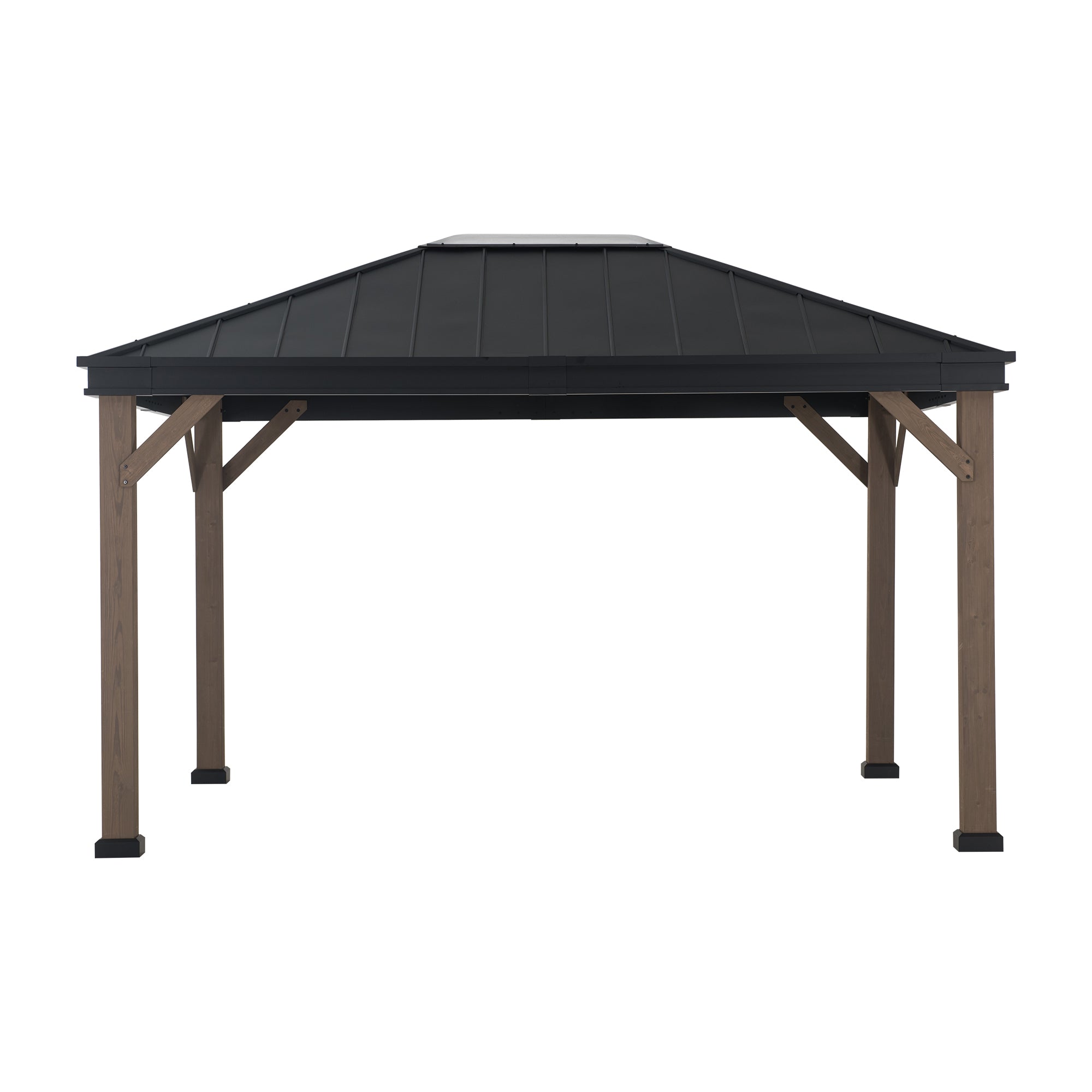
The collection presents several roof-style labels: two-tier, gable, hip, octagon, and shed. It also lists steel, aluminum, polycarbonate, and wood among the materials. These labels can help narrow a search, but they do not by themselves establish how a specific structure will suit your yard, furniture, exposure, or maintenance preferences.
| Collection-level information | How to use it | Boundary |
|---|---|---|
| Roof-style labels include two-tier, gable, hip, octagon, and shed. | Use the labels to organise a shortlist by visual form. | These are collection-level labels; confirm the option on the specific model listing. |
| Listed materials include steel, aluminum, polycarbonate, and wood. | Use the material label to identify a question for the selected product page. | A material label alone does not establish performance, lifespan, or maintenance needs. |
| The page compares hard-top and soft-top options across roof materials, weather-related claims, maintenance expectations, and use contexts. | Use the comparison to structure your reading of the listing. | Treat the wording as page-level comparison information, not a guarantee for every model. |
| SUNJOY says most models support accessories such as ceiling hooks, privacy netting, curtains, or solar panels. | Match the intended accessory to the selected model and hosting plan. | “Most models” does not confirm compatibility for every model or accessory. |
For example, a roof-style label may help you compare the visual form of two listings. A material label may give you a useful question for the product page. Neither label should be expanded into an unverified statement about strength, lifespan, waterproofing, wind performance, or installation requirements. Keep the comparison precise: identify what is listed, then assess whether that information answers your household’s practical question.
Use accessories to test the hosting plan
Accessories are another way to connect a listing to real use. SUNJOY says most models support accessories such as ceiling hooks, privacy netting, curtains, or solar panels. For a family that hosts outdoors, that list can prompt a more specific plan. Would overhead hanging space be useful? Would privacy matter near a boundary? Would curtains change how the space is used? Is a solar-panel option relevant to the intended setup?
The important word is “most.” A collection-level accessory statement should not be treated as confirmation that every model accepts every accessory. Compare the selected listing with the intended arrangement, and keep accessory compatibility separate from broader assumptions about comfort, weather protection, or convenience. A clear shopping note might record the desired accessory, the exact model under consideration, and the page language that addresses it.
Make the weather discussion model-specific
When evaluating hardtop gazebos, read the weather-related section as one part of a larger decision. Look for the exact roof material and style shown for the selected model, then compare that wording with the conditions your outdoor space commonly faces. Consider exposure, surrounding trees, drainage, access for upkeep, and the space needed around furniture. These are sensible planning prompts, not proof that a product has a particular performance rating.
Also distinguish a category comparison from a model specification. The collection can show the range of options available across the category, while the individual listing should establish which roof style, material, accessory support, and other details belong to the product you are actually considering. This distinction prevents a shopper from combining the most attractive feature from one listing with the appearance of another.
A practical comparison sequence
Use a short sequence before treating one listing as the best fit. First, write down the main activity and the furniture or equipment involved. Second, record the collection labels that appear relevant, such as roof style and material. Third, read the page’s hard-top and soft-top comparison for its stated weather, maintenance, and use-context language. Fourth, check whether the selected model addresses the accessories or layout your plan depends on. Finally, separate confirmed page details from questions that remain matters of site planning or personal preference.
This approach keeps the decision grounded without pretending that a category page answers every installation or performance question. It also makes comparisons easier to explain to another household decision-maker: one person can review the intended use, while another checks the listing details and accessory notes. The result is a more disciplined shortlist rather than a decision based only on a broad weather-related phrase.
Choose the listing that fits the evidence and the space
For families hosting outdoors, the sensible comparison is not simply which roof style looks best. It is which listed option aligns with the planned routine, the available space, the relevant material and roof-style information, and the model-specific details that matter to the setup. Use the collection labels to organise the search, use the comparison section to frame questions, and use the selected product listing to keep the final choice specific. That is the practical way to assess SUNJOY without turning category-level wording into a promise about every fixed backyard structure.
