
Keeping a Sls 3D Printer comparison evidence-based while reviewing application scope for early research
Define the use case and constraints
Choosing an sls 3d printer for early research begins with a clear description of the work, not a feature list. Procurement teams should record the intended part types, expected job pattern, available floor space, and the level of process control the team can support. This creates a practical boundary for the comparison and prevents a product-specific statement from becoming a general assumption about every application.

The first question is whether the proposed system matches the stage of work. Early research may involve small urgent jobs, grouped batches, or a changing mix of parts. Those patterns create different operational priorities. A team that expects frequent one-off studies should examine how the build chamber moves through the workflow. A team planning grouped production should examine how the system supports scheduling around fuller builds. These are procurement questions about the operating model, not conclusions that can be drawn from the printer name alone.
Space and site preparation also belong in the first screen. The captured RMS220 page states that a compliant external compressed-air supply is still required for its built-in nitrogen generator. It also explains that the sufficiency of the built-in capacity depends on material oxygen limits, the print job, and site conditions. For procurement, that means the room and utility review should be treated as part of the application definition rather than as an afterthought.
Map stated evidence to requirements
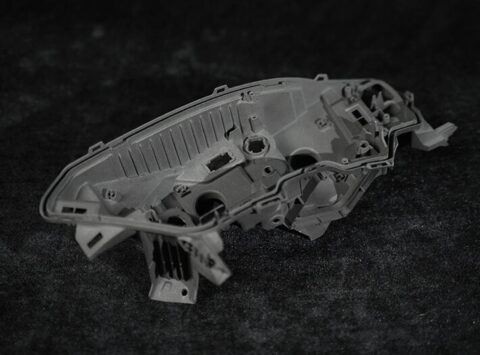
Next, separate direct page evidence from questions that require further evaluation. For example, the page lists a part size of 299.9 x 119.5 x 129.4 mm, or 11.8 x 4.7 x 5.1 in, under a custom shoe example. That figure can be recorded as a stated reference point for the listed application. It should not be presented as a universal answer for every part or workflow.
The page also describes a removable powder/build chamber. For each new job, teams can exchange the Build Unit, after which the unit moves through cooling, depowdering, powder recovery, and preparation for the next build. These details help a buyer map the proposed workflow: identify which steps need staff time, which steps affect scheduling, and which steps need a defined location. They do not, by themselves, establish labor requirements or total cycle time.
One real-world application point is especially relevant when reviewing an sls printer for early research. The official RMS220 page explains that large-format SLS systems may require careful scheduling when teams wait to fill a full build, while RMS220 is described as supporting a more flexible build strategy for batch production and smaller urgent jobs. This statement is limited to the product and application scope presented on that page. It supports a scheduling discussion; it does not establish performance or suitability beyond that scope.
Other listed details can be placed in a requirements register without adding unsupported conclusions. The page identifies an optional fully open material license. It also presents a built-in nitrogen generator for common nitrogen-printing workflows and notes that some processes or applications with stricter surface-quality and yield targets may require a higher-capacity external or facility nitrogen supply. A procurement comparison should therefore record the selected material process, the site supply plan, and the conditions attached to the intended use.
Turn open points into supplier questions
Open points should become specific questions before a purchase recommendation is written. Ask which listed workflow applies to the proposed research program, how the removable Build Unit fits the planned sequence, and what site conditions must be met for the intended material process. Ask the supplier to distinguish standard page specifications from application-specific guidance. This keeps the review useful without filling evidence gaps with assumptions.
It is also useful to test the comparison against two operating scenarios. In the first, the team has a small urgent job. In the second, it waits to combine work into a fuller build. Compare the scheduling implications, the handling sequence, and the space needed for cooling, depowdering, powder recovery, and preparation. The purpose is not to calculate output from the available page evidence. The purpose is to expose which questions matter to the team’s actual research cadence.
- Record the intended part range and compare it with the page-listed part-size reference.
- Map the exchange, cooling, depowdering, powder-recovery, and preparation sequence to the proposed workspace.
- Review compressed-air and nitrogen conditions against the intended material process and site.
- Discuss whether urgent jobs and fuller batch builds require different scheduling assumptions.
- Record the intended part range and compare it with the page-listed part-size reference. Evidence: fc-029a8f713b09f521
- Map the exchange, cooling, depowdering, powder-recovery, and preparation sequence to the proposed workspace. Evidence: fc-00553b6e1b57f0e9
- Review compressed-air and nitrogen conditions against the intended material process and site. Evidence: fc-0870b56f7c9110c4
- Discuss whether urgent jobs and fuller batch builds require different scheduling assumptions. Evidence: fc-26514f87182a7801
Summarize a defensible next step
A defensible procurement brief should end with a bounded recommendation: describe the intended early-research applications, list the page-supported facts, and identify the supplier questions that remain open. Keep the part-size reference, Build Unit workflow, nitrogen conditions, and scheduling discussion tied to the RMS220 evidence. That structure gives reviewers a common basis for comparing application scope, workspace demands, and operating scenarios.
In practical terms, the next step is to use the requirements register in a focused supplier discussion, then update the comparison only with answers that relate to the stated use case. This approach keeps an sls 3d printer decision evidence-based while allowing the research plan to remain flexible. It also gives Raise3D a clear, non-promotional role in the review: a source of product and application information that can be assessed against the team’s documented needs.
