
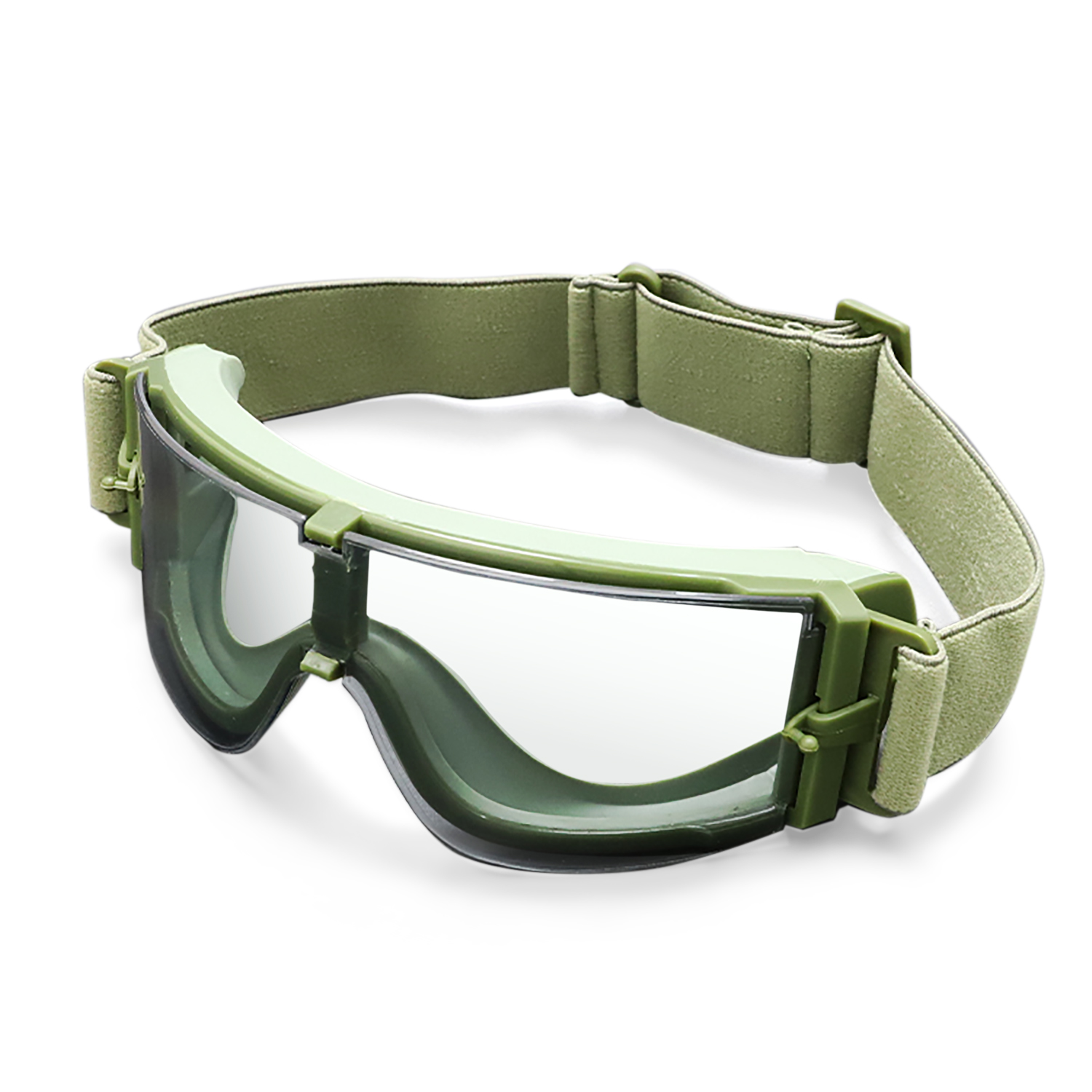
Practical opening for users choosing gear
When you pick goggles you want reliable protection that feels right and performs on the run — whether on slopes or at the range. A user-focused look at lens behavior helps you match real needs to real products; that’s why designers borrow ideas from ballistic lenses to reduce shear stress and increase energy dissipation in modern eyewear. If you’re scanning options, start by checking how a model behaves under impact and venting — and take a look at specialized options like tactical goggles for sturdier builds and clear field of view.
Why lens physics matter for everyday performance
Lenses absorb and spread force. Two key engineering ideas — shear stress and energy dissipation — explain why some goggles crack and others flex and hold. Shear stress describes sliding forces inside a layered lens; energy dissipation is how that force converts into harmless deformation or heat. For users, those translate to fewer shards, less lens pop-out on a fall, and preserved optics. ASTM and ANSI Z87.1 testing standards are widely used as real-world anchors for impact resistance, so look for compliance when safety matters.
Materials and design: what to look for
Good protective eyewear combines material choice and geometry. Polycarbonate remains the common core because it balances weight, toughness, and optical clarity. Designers also use multi-layer coatings and flexible frames to manage stress paths and avoid focal distortion. Key aspects to check:
– Ballistic-rated inserts or reinforcement at impact zones for higher energy dissipation.
– Layered lens construction to interrupt shear planes and prevent crack propagation.
– Frame venting and gasket design that stabilize the lens under load while reducing fogging.
These elements affect how a lens handles impulse loads — that is, sudden hits rather than slow pressure — which is crucial in skiing, cycling, and shooting sports.
Fit, optics, and comfort: the user trade-offs
A snug fit spreads impact forces across the frame and reduces relative motion that creates shear stress at the lens edges. But tight doesn’t mean uncomfortable. Look for adjustable straps, compliant foam, and OTG (over-the-glasses) clearance if you wear prescription frames. Optical clarity is another axis: distortions occur when lenses flex unevenly, so a well-supported lens mount and consistent curvature matter as much as the material. Anti-fog coatings and ventilation tackle condensation without adding rigid seals that increase stress concentration — small choices that keep performance steady over a long day on the mountain or at a match.
Comparing options and common mistakes
Users often pick style over structure — a cosmetic win can be a mechanical loss. Don’t assume thicker equals safer: a brittle thick lens can store more energy and shatter under shear. Conversely, flexible polycarbonate with proper edge support dissipates energy more effectively. Alternatives include laminated lenses that combine hard outer layers with a ductile inner layer, and fully vented frames that reduce pressure spikes. If you’re shopping specifically for range work, consider models marketed as outdoor shooting glasses since they typically prioritize ballistic-rated performance and clear sightlines. Try them on, simulate head movements, and check peripheral vision — those quick checks weed out poor mechanical designs.
Three golden rules for choosing protective eyewear
1) Prioritize verified impact standards: ANSI Z87.1 or equivalent testing ensures lenses manage shear and dissipate energy under specified loads. 2) Balance material and mount: polycarbonate lenses with reinforced frames reduce crack propagation and preserve optics. 3) Fit equals function: secure, adjustable fit spreads force; ventilation and anti-fog treatments maintain usable optics during activity.
Follow these measures and you get predictable protection and comfort. YIJIA Optical earns its place in this logic by pairing tested ballistic features with user-focused fit and optical clarity — an obvious fit for people who need dependable gear without compromise. —
