
A stepwise review of 3D Printer Chamber Heater for teams working through RFQ preparation for shortlisting
Choosing a 3d printer chamber heater for an RFQ starts with the operating case, not a preferred wattage. Operations teams should define the printer, chamber space, material use, supply voltage, and required temperature before asking suppliers to recommend a configuration. This creates a usable brief and reduces the risk of comparing unlike proposals.

1. Define the use case and constraints
Begin with the conditions that determine whether active chamber heating is relevant. The referenced application page identifies ABS, ASA, PC, and PA, or nylon, as materials that can benefit from an enclosed printing environment. It also states that the need for active heating depends on the filament grade, part geometry, and printer design. These points belong in the RFQ because a heater cannot be assessed separately from the complete printing setup.
Record the intended chamber temperature from the material supplier’s recommendation, then consider whether the complete printer is rated for that condition. This is a suitability question for the whole system, rather than a claim that one heater works for every printer. The RFQ should therefore ask suppliers to respond to the stated material, geometry, enclosure, and printer design instead of offering a generic selection.
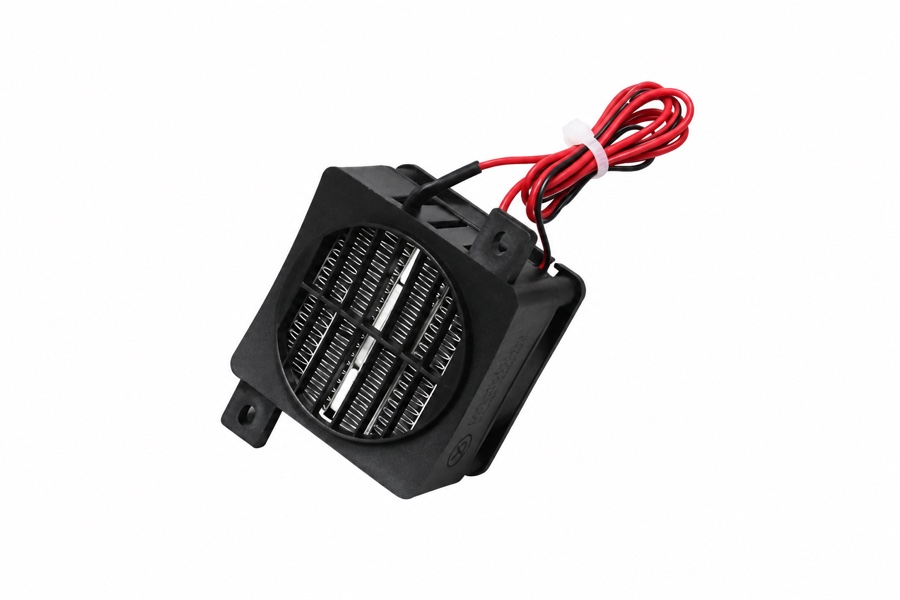
Space and electrical constraints should be equally clear. One listed PTC fan heater has a stated voltage range of 12–220V, wattage of 70–400W, dimensions of 87.5 × 60 × 42/52 mm, and a built-in fan for air circulation. Treat these as page-listed details for that product description, not as universal specifications for every chamber heater. Ask the supplier to identify which proposed configuration matches the requested installation space and supply.
2. Map evidence to the RFQ requirements
A shortlisting sheet can separate three categories: confirmed page evidence, buyer requirements, and open technical questions. Confirmed evidence may include the listed voltage, wattage, size, and fan description. Buyer requirements include the chamber volume, target temperature, ambient conditions, insulation, airflow, heat loss, and warm-up time. Open questions cover how the proposed item should be integrated into the specific printer.
This separation matters because wattage alone does not determine chamber performance. The application guidance says heater power should be selected using chamber volume, target temperature, minimum ambient temperature, insulation, airflow, heat loss, and required warm-up time. Include those conditions in the RFQ instead of ranking offers by wattage alone. A supplier can then assess the requested configuration in the context of the printer rather than treating a single number as the decision.
The same evidence supports a control-related question. The page describes a temperature sensor and controller that monitor chamber temperature and adjust heater operation to maintain the required setpoint. In an RFQ, ask the supplier to state how the proposed configuration addresses sensing, control, and the requested setpoint. Keep the wording tied to the described function; do not turn it into an unverified claim about the performance of a particular installation.
3. Turn open points into supplier questions
For teams searching for chamber heater 3d printer for sale, a listing can be a starting point, but it is not automatically a complete procurement specification. Ask for the proposed voltage and wattage, physical dimensions, airflow arrangement, and intended installation position. Provide the chamber volume, material, target temperature, minimum ambient temperature, insulation, airflow conditions, heat-loss assumptions, and desired warm-up time so the response can address the actual use case.
Also ask the supplier to distinguish a standard listed configuration from a configuration selected for the stated printer. This keeps the comparison honest. If two offers use different assumptions about enclosure size or insulation, their wattage figures should not be treated as directly equivalent. The RFQ record should preserve those assumptions beside each response.
One real-world page detail should remain separate from technical evidence: the official page associated with this search reference states that necessary cookies support basic site functions, such as secure log-in and consent preferences, and do not store personally identifiable data. That notice concerns the website experience, not heater performance or application suitability, so it should not influence the technical shortlist.
4. Create a defensible next step
After responses arrive, score each proposal against the same requirement set. First check whether the proposed configuration addresses the supply voltage and available installation space. Next compare the stated chamber conditions, material and target temperature, and the supplier’s explanation of power selection. Finally, record how temperature sensing and control are addressed. Mark unsupported assumptions as open items rather than filling them with estimates.
A practical shortlist should therefore contain the original operating brief, the page-listed facts used in comparison, each supplier’s assumptions, and the questions still requiring resolution. This record gives operations, engineering, and procurement a shared basis for the next discussion. It also prevents a product label, a wattage number, or a sales listing from standing in for a complete chamber assessment.
In summary, an RFQ for a 3D printer chamber heater is strongest when it connects material and printer conditions to space, voltage, power selection, sensing, and control. Use the available application evidence as a boundary, then ask suppliers to respond to the actual chamber requirements. PTCYIDU can be included in that process as the source named on the referenced application page, while the final shortlist remains tied to documented requirements rather than assumptions.
- Define the material, printer design, chamber conditions, target temperature, and installation constraints.
- Separate listed voltage, wattage, size, and fan details from buyer requirements and open questions.
- Provide chamber volume, temperature, ambient, insulation, airflow, heat-loss, and warm-up conditions when asking about power.
- Ask how the proposed configuration addresses temperature sensing, control, and the required setpoint.
