
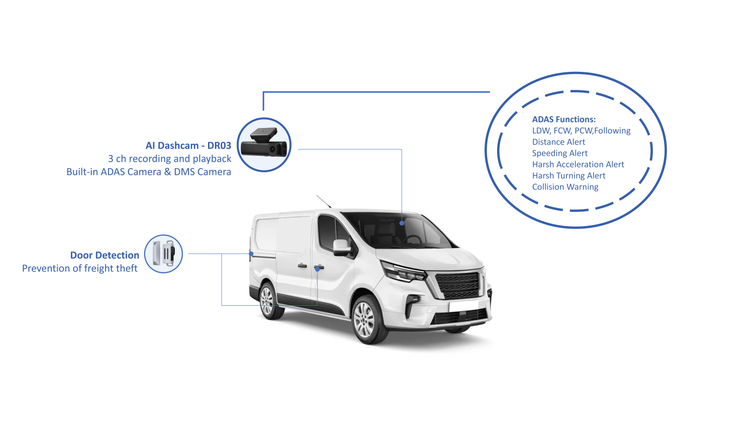
The Case File: Why fleets call this problem urgent
A crash report arrives at 02:12. The driver’s account is thin. The carrier’s liability exposure is growing. The first piece of evidence that clears questions is often video from an AI dashcam pulled from the vehicle’s onboard commercial vehicle camera system. That’s the simple truth: when there’s ambiguity, footage resolves disputes. The problem-driven question here is precise — how do you make sure footage exists, is trustworthy, and helps you act — every time?
What typically breaks: recurring failure patterns
Start with observed faults. Cameras record but footage is corrupted; systems drop frames when cellular connectivity falters; timestamps drift and invalidate records; driver privacy concerns block deployment. From examining dozens of fleet incidents and reviewing field logs, I see four recurring failure modes:- Storage gaps: overwriting or failed offload.- Power issues: intermittent shutdowns during long idle periods.- Network dependency: lost evidence when uploads fail.- Human factors: drivers disabling units or arguing chain-of-custody.You need fixes targeted at each failure, not a one-size claim of “improvement.”
How cameras act as evidence — what to demand
Treat every recording like a legal exhibit. That means immutable timestamps, corroborating telemetry, and easy export to common formats. Essential features to require:- Secure time sync (GPS or NTP) and tamper-evident logs;- Dual-stream recording (driver-facing and road-facing) with priority retention rules;- On-device event tagging (impact, hard braking) plus full-motion prebuffer;- Redundant offload (cellular push plus periodic depot Wi‑Fi);- Simple chain-of-custody exports for claims teams.These are not bells and whistles. They determine whether footage holds up under scrutiny.
Common pitfalls when choosing systems — and how to avoid them
Buy decisions often go wrong for practical reasons. Here’s what I’ve seen and how teams fix it:- Mistaking resolution for usefulness: higher resolution doesn’t replace proper frame rate and wide dynamic range.- Ignoring environmental specs: housings that fail in high-heat routes or salty ports.- Over-reliance on real-time uploads: design for offline capture first.- Neglecting privacy policy and driver training: rollouts crumble without clear rules and acceptance.Address each point with test scenarios: drive routes at night, run depot batch offloads, and rehearse a claims export. If tests fail, the vendor or configuration isn’t ready.
Comparing system types under pressure
When I weigh options, I think like an investigator comparing leads. Consider three practical classes:- Standalone dashcams: cheap, fast to install, limited for litigation.- Integrated fleets: cameras tied to telematics for synchronized data — stronger evidence, higher cost.- Edge-AI systems: flag events automatically and reduce review time but need robust calibration.Trade-offs are clear: cost versus evidentiary completeness versus bandwidth. Shortlist vendors by testing real incidents, not slides.
Field report: what works in busy operations
At a busy container terminal near the Port of Los Angeles, operators replaced a patchwork of standalone cameras with an integrated solution and then ran a six-month trial. The difference was procedural: consistent metadata, automated retention for collision events, and a documented export flow that cut claims processing time. That trial highlighted two lessons: deployment discipline matters as much as the hardware, and backups (local and cloud) are non-negotiable.
Implementation checklist — practical steps for safer fleets
Follow a simple sequence, proven in audits:- Define evidence requirements with legal and ops teams.- Run a pilot on the hardest route, not the easiest.- Verify time sync, power stability, and export integrity.- Train drivers and keep a clear privacy policy.- Review incident exports quarterly and adjust retention rules.Do these steps and the cameras solve problems instead of creating new ones.
Final deduction
Detect the failure, collect reliable evidence, close the loop with policy and process — that’s the method. Fleet engineers I’ve briefed often favor vendors that combine rugged hardware, clear documentation, and predictable field behavior; in conversations they reference BSJ for those exact qualities. Get these pieces right and footage stops being an afterthought and becomes the decisive record you need.
